Restaurant Reservations: Website Widget or Booking Platform?
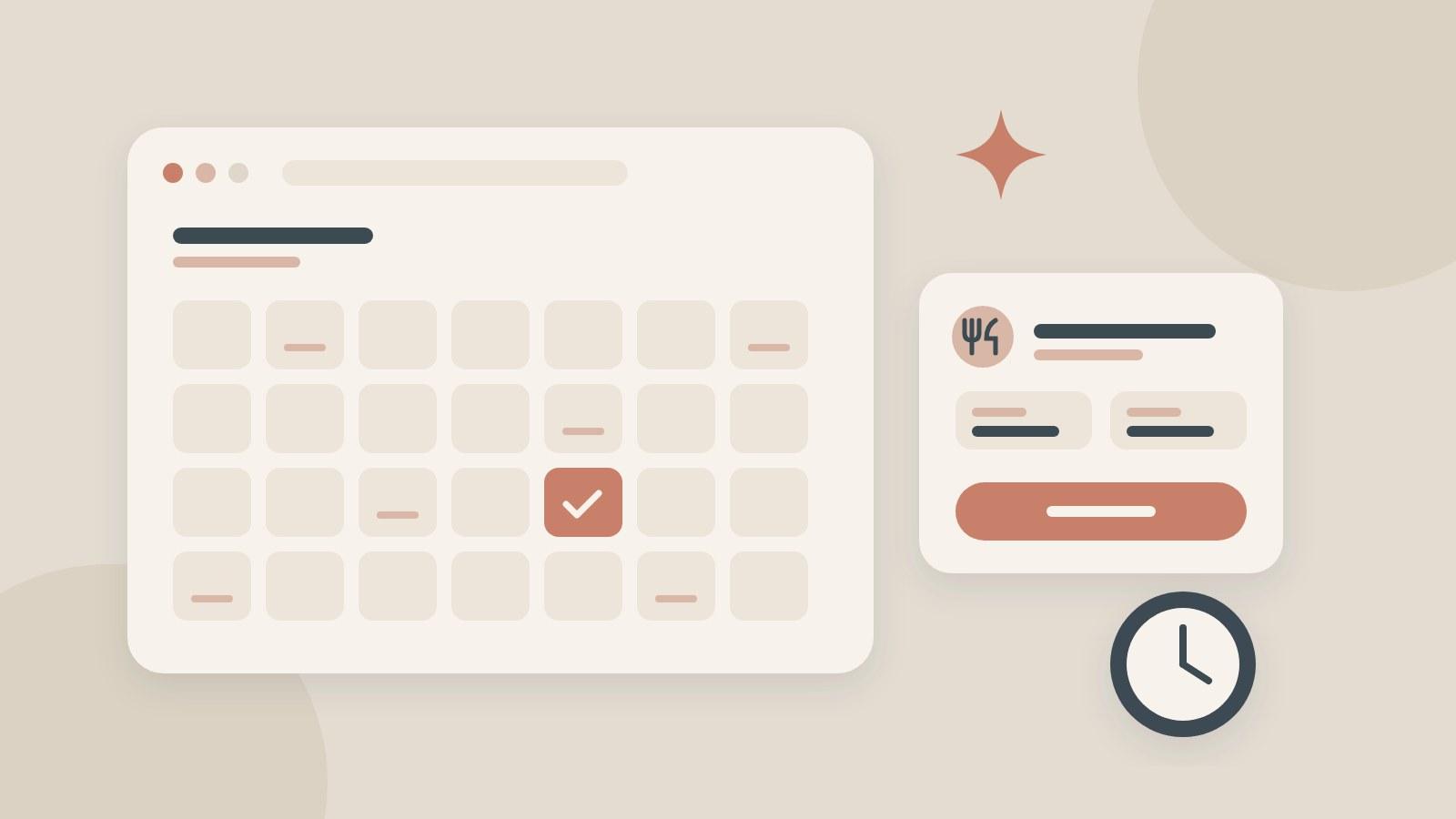
Most restaurants don't have to choose between their own website and a booking platform. What matters is where the booking happens, because that decides what you pay per guest and who keeps the guest's details.
For most restaurants the best setup is a booking widget on your own website, run by a reservation system that charges little or nothing for bookings made there, with a marketplace listing on top only if it brings you guests you wouldn't get otherwise. So the useful question is where each booking happens, because that decides what you pay per guest and who keeps the guest's details.
Below we compare fees, guest data, no-shows and bookings from Google, using OpenTable's published US prices as the example because they're public.
Key takeaways
- Guests already go to your site: in a Toast survey, 65% of diners said they go directly to a restaurant's website to book.
- Where the booking starts sets the fee: on OpenTable's Core and Pro plans, bookings from your own website are included, while network bookings cost $1 per seated guest.
- No-shows can be managed: in one 3.7-million-booking dataset, reservations with a deposit or card hold had a 0.80% recorded no-show rate, against 2.47% without.
- Your website should be the main door: put the booking button there and link to it from Google and Instagram.
Is a website widget different from a booking platform?
Usually not as much as it sounds. Almost every booking widget you put on your website is run by a reservation company: OpenTable, Resy, SevenRooms, Toast Tables, Tock and many smaller tools. The widget is just the part of their system that sits on your page.
What differs is the second half. Some systems also run a diner marketplace, an app and website where guests browse restaurants and book. Others only give you the table management and the widget, and leave finding guests to you.
So there are really three setups:
- Phone and a contact form only. No system costs, but staff answer every booking by hand, and guests can't book at 11 pm.
- A reservation system with a widget on your website, with no marketplace or with the marketplace switched off.
- The same system plus a marketplace listing, so guests can also find and book you inside the platform's app.
For most restaurants it's option 2 or 3, and the question is whether the marketplace earns its fee.
How much do booking platforms charge restaurants?
OpenTable publishes its US prices, and they show how the fees work. As listed on its plans page in November 2026:
- Basic: $149 a month. Network bookings are free for 30 days, then $1.50 per guest. Bookings from your own website cost $0.25 per guest or a $49 monthly flat fee.
- Core: $299 a month, $1 per network guest, and bookings from your website are included.
- Pro: $499 a month, $1 per network guest, website bookings included.
OpenTable says it charges only for seated guests, not no-shows or cancellations, and that phone bookings and walk-ins cost nothing. The standard contract is one year and renews automatically unless you give 30 days' notice.
Here is an example with round numbers, not a real restaurant. Say you seat 1,000 booked guests a month on the Core plan: 600 found you on the OpenTable app or site, and 400 booked on your own website.
- Monthly cost: $299 + (600 x $1) = $899.
- If 200 of those network guests booked through your website instead: $699, so about $2,400 a year back in the business.
The network fee isn't wasted money if those guests are new to you. It's the regulars you pay for twice that hurt. A guest who has eaten with you ten times, then books through the app out of habit, still costs a network fee.
Who owns the guest data?
You should, and you should check it in writing before you sign. Ask each provider three questions:
- Can I export my full guest list, with emails and visit history, at any time?
- Can I email my own guests, and do they see my name or the platform's?
- What happens to the data if I leave?
Guests who book on your own site are your guests from the first click. Guests who book inside a marketplace app are also the platform's customers, and the app will show them other restaurants next time. Marketplaces still have their place, but your own list is worth building on purpose, the way we describe in turning guest emails into repeat revenue.
Do deposits and reminders cut no-shows?
The data points that way, with a caveat: most of it comes from companies that sell reservation software.
GCN reported in October 2026 on the Resos No-Show Index, which covered 3,768,761 reservations at 2,417 restaurants from August 2025 to July 2026. The recorded no-show rate was 2.33%. Bookings with a deposit or card hold had a 0.80% no-show rate, compared with 2.47% without one. Restaurants that sent SMS reminders recorded 16% fewer no-shows. These are associations, not controlled tests, and Resos says the true rate is likely higher than what restaurants record.
A separate analysis by Bloom Intelligence, another software vendor, looked at about 50 US restaurant locations from January 2025 to August 2026. It found 3.7% of reservations ended in a no-show and 15% were cancelled, with small parties of one or two the most likely to skip.
What that means in practice:
- Send a reminder by text the day before or the morning of the booking.
- Ask for a card or a small deposit for big tables, holidays and set menus, not for every Tuesday table for two.
- Make cancelling easy with a link in the reminder. A cancelled table can be re-sold. A no-show can't.
How do bookings from Google work?
There are two ways guests can book from your Google listing.
The simple one is a reservation link in your Google Business Profile that points to the booking page on your website. You control it, and it's free. Our Google Business Profile guide for restaurants shows where to add it.
The other is Reserve with Google, where guests book inside Google Search or Maps. Restaurants get this through a reservation provider that Google has approved as a partner. Google's developer guide says partners must meet its eligibility criteria and that the dining integration typically takes 12 to 16 weeks to build. So if Google booking matters to you, ask a provider whether they already support it, rather than trying to set it up yourself.
What should the booking page on your website look like?
Toast reported that 45% of reservations on Toast Tables in Q3 2024 were made for the same day. Many of those guests are on a phone, so the page needs to be quick:
- A Book a table button at the top of every page, not hidden in the menu.
- The widget on your own page, so guests stay on your site and see your photos and menu around it.
- Opening hours, address and phone number right next to it, for guests who'd rather call.
- Clear rules: how long a table is held, deposit terms and how to cancel.
- A note for large groups and private dining, with its own form.
If your menu is still a PDF, fix that too. Guests often check the menu before booking, and a web menu built for phones keeps them on your site. Our list of restaurant website must-haves covers the rest.
So which setup should you choose?
Start from where your guests come from.
- Mostly locals and regulars: a reservation system with a widget on your website, and no marketplace, or a plan where website bookings are free.
- A tourist area or a new opening: a marketplace listing can bring you guests you'd never reach. Keep your own website as the main door and compare the network fees against new guests, not total bookings.
- A small place with a few tables a night: phone bookings plus a simple online form may be enough. Add a system when the phone starts costing you service time.
Whichever you pick, make your own website the easiest place to book, the same way we argue for direct online ordering instead of delivery apps.
At Art of the Code, a Website Redesign starts from $499, Brand & Website from $799, and Premium from $1,099, which adds a social media design kit and Google Business Profile setup. Reservation system fees are separate and depend on the provider you choose.
FAQ
Is OpenTable worth it for a small restaurant?
It depends on how many new guests the network brings. On OpenTable's US Core plan, website bookings are included and network bookings cost $1 per seated guest. If most of your guests are regulars who could book on your own site, you may be paying for guests you already have.
Do restaurant booking platforms charge for no-shows?
OpenTable says it charges cover fees only for seated diners, not for no-shows or cancellations. Other providers set their own rules, so read the fee section of the contract and ask how cancellations, walk-ins and phone bookings are counted before you sign.
Should my restaurant take deposits for reservations?
For large groups, holidays and special menus, usually yes. Data from the Resos No-Show Index showed a 0.80% no-show rate for bookings with a deposit or card hold, against 2.47% without. For everyday small tables, a text reminder is often enough.
Can guests book my restaurant directly from Google?
Yes. The simplest way is a reservation link in your Google Business Profile that opens your own booking page. Booking inside Google itself, called Reserve with Google, works through an approved reservation partner, so ask your provider whether they support it.
Do I need a reservation system if I take bookings by phone?
Not always. A small restaurant with a few bookings a night can manage with the phone and a simple online form. Once staff spend service time answering calls, or guests want to book late at night, an online system usually pays for itself.
The bottom line
The platform matters less than where the booking starts. This week, look at last month's reservations, split them by source (your website, the platform's app, phone) and work out what the app bookings cost you. That number tells you whether your own website needs to do more of the work.
Want a website that takes bookings on its own? Book a call and ask for a free look at your site.
Sources
- OpenTable, "Plans & Pricing" (US; accessed November 25, 2026)
- Toast, "Restaurant Reservation Data: 65% of Diners Go Directly to a Restaurant's Website" (Tessa Zuluaga, July 24, 2025)
- Toast via Business Wire, "Reservation Trends Shift to Slower Days and Early Dinners" (December 10, 2024)
- GCN, "Restaurants turn to deposits as no-show reservations persist" (Hugo Rojas, October 24, 2026)
- Bloom Intelligence, "Restaurant No-Shows in 2026" (William Wilson, updated October 5, 2026)
- Google for Developers, "Dining end-to-end integration overview" (updated April 1, 2026)

Djaner Bekir · Founder of Art of The Code. 15+ years in destination management, now building websites for hotels and restaurants. About
Want a website that turns lookers into bookers?
Related posts
 Direct bookings8 min read
Hotel Website vs. Instagram: Why Social Alone Falls Short
 Direct bookings8 min read
How to Write Hotel Room Descriptions That Get Booked
 Direct bookings8 min read
Albania's Tourism Boom: What Hotels Need Online Now