Restaurant Website Must-Haves: 12 Features That Fill Tables
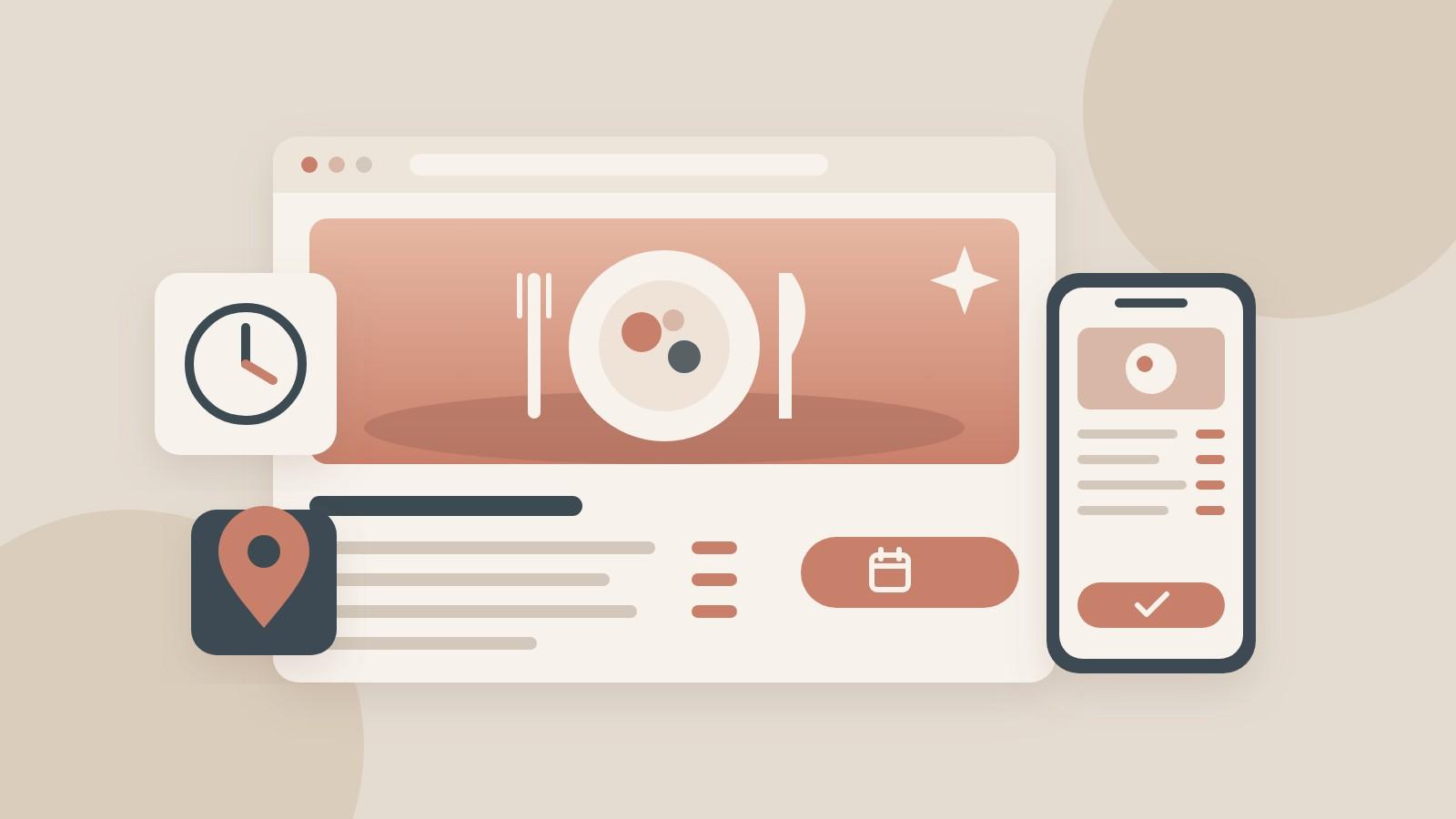
Most diners check your website before they book or order. Here are the 12 features that turn that visit into a table or an order, with 2025 and 2026 data and a simple order of priorities for a small restaurant.
A restaurant website needs to do three jobs fast: show the menu, answer "when and where", and let people book or order without leaving the page. Everything else on this list supports those three jobs. Guests decide in seconds, usually on a phone, and the restaurants that make the next step easy are the ones that get the table.
This guide covers the 12 features that matter most, why each one matters, and which to fix first if your time or budget is limited.
Key takeaways
- Your site is part of the decision: 65% of US adults in a Toast survey said they go straight to a restaurant's website to book.
- The menu comes first: 54% of diners would check menu details and prices before trying a restaurant an AI tool suggested (Menufy/Dynata, September 2026).
- Direct ordering has demand: 58% of US consumers prefer ordering delivery through the restaurant's own app or website (NCR Voyix).
- Start with the basics: menu, hours, booking and a fast mobile page beat any fancy extra.
Why does a restaurant still need its own website?
Because guests check it before they spend money. In a Toast survey of 850 US adults, published in July 2026, 65% said they go directly to a restaurant's website to make a reservation, and 44% said a restaurant becomes less appealing when booking is difficult.
AI search makes your site more important, not less. In a September 2026 survey of 1,000 US consumers by Dynata for Menufy, 60% said they use AI tools like ChatGPT or Google AI Mode to help choose where to eat. Only 2% would order from an unfamiliar AI-recommended restaurant without checking another source first, and 47% would visit the restaurant's official website.
Social profiles and delivery apps help people find you. Your website is where you control the menu, the prices, the booking and the guest data.
What are the 12 must-have features for a restaurant website?
1. A real web menu, not a PDF
Put your menu on the page as text, with prices. PDFs are slow to open on phones, hard to zoom, invisible to many search tools and often out of date. A text menu loads fast, can be read by screen readers and Google, and takes minutes to update. Add short descriptions and simple tags like vegetarian, vegan, gluten-free and spicy.
2. Hours, address and phone at the top
The most common reason people open a restaurant site is to answer "are they open, and where are they?" Show today's hours, the address and the phone number on the homepage, without scrolling. List holiday hours and closures in the same place.
3. A one-tap reservation button
If you take reservations, put a "Book a table" button in the header on every page, and make it work on a phone in a few taps. Whether you use your own widget or a platform, the button should be the easiest thing on the screen to find. If you don't take bookings, say so clearly ("Walk-ins only") so guests don't hunt for a button.
4. Direct online ordering for pickup or delivery
In a November 2024 survey by NCR Voyix, 58% of US consumers said they prefer ordering delivery through a restaurant's own app or website. Delivery apps still help with discovery, but each order through them costs you commission. Olo CEO Noah Glass put third-party delivery commissions at 20% to 30% in a January 2025 interview.
Here is an example: a restaurant does 200 app orders a month with a $40 average order. At a 25% commission, that is $2,000 a month in fees. Moving even a quarter of those regulars to direct ordering keeps about $500 a month in your pocket, before any ordering-system fees. Our post on the hidden cost of Airbnb fees makes the same case for rentals.
5. A fast, mobile-first design
Most restaurant searches happen on a phone, often on the street or in a car. Google's Core Web Vitals give clear targets: the main content should load in 2.5 seconds or less, taps should respond within 200 milliseconds, and the layout should not jump around while loading. Big uncompressed food photos and auto-playing videos are the usual reasons a restaurant site misses these targets. Our guide to why fast mobile sites earn more explains the basics with hotel examples that apply to restaurants too.
6. Click-to-call and directions
Make the phone number a tap-to-call link and the address a link that opens maps. Add a short "Getting here" note with parking, the nearest transit stop or the entrance if it is hard to spot. Small details like these stop people from giving up at the last step.
7. Real photos of your food and your room
Show the dishes you actually serve and the room guests will sit in. Real photos set honest expectations and help people picture the evening: a date night, a family lunch, a big group. Keep them sized for the web so they load fast, and replace them when the menu or the room changes.
8. Details that match your Google Business Profile
Your name, address, phone, hours and menu link should be the same on your website, your Google Business Profile and every directory. When the details disagree, Google and AI tools are less sure which ones are right, and guests may show up at the wrong time. Add your booking and ordering links to your Google profile so people can act straight from search. Our local SEO guide covers the "near me" side.
9. An events and private dining page
Group dinners, birthdays, tastings and company events are some of the most valuable bookings you can get. Give them their own page with room sizes, set menus or minimum spend if you have them, photos, and a simple enquiry form. A page like this can also rank for searches such as "private dining room" in your city.
10. Gift cards you can buy online
Gift cards bring in money before the meal and often bring new guests through the door. Sell them on your own site, ideally as digital cards that can be sent by email, and promote them before holidays. Put a "Gift cards" link in the header or footer so people can find it all year.
11. An email or SMS sign-up
Delivery apps and booking platforms keep many of your guests' details. Your own sign-up form lets you reach regulars directly with new menus, events and quiet-night offers. Ask for an email address with a clear reason to join, like first news of seasonal menus. Our post on turning guest emails into repeat revenue shows how to use the list.
12. Accessibility basics
Text menus, good color contrast, alt text on photos and buttons that work with a keyboard help guests with disabilities and also make the site easier for everyone. There is a legal side too: UsableNet counted 5,114 US digital accessibility lawsuits in 2025, and 21% of them targeted food service businesses.
Which features should a small restaurant fix first?
If you can only do a few things this month, work in this order:
- Menu as a web page with prices and dietary tags.
- Hours, address and phone on the homepage, matching Google.
- Booking or ordering button in the header, working on a phone.
- Speed check on your homepage and menu page with Google PageSpeed Insights.
Then add the rest over time: events page, gift cards, email sign-up and photo updates. A simple site that does these well will beat a beautiful site that hides the menu in a PDF.
What does a restaurant website cost?
It depends on what you need built. At Art of the Code, a Website Redesign of your existing site starts from $499 and includes a mobile-friendly, fast design, SEO basics and a contact or booking form. Brand & Website starts from $799 and adds a logo and brand identity. Premium starts from $1,099 and adds a social media design kit and Google Business Profile setup. Ordering and reservation systems usually come from a separate provider with their own fees, so ask about those when you compare quotes.
FAQ
Is a Facebook or Instagram page enough instead of a website?
No. Social pages are good for discovery, but you don't control how they show your menu, hours or booking button, and the platforms change their rules often. A website is the one place guests can always find accurate details and book or order directly with you.
Should my restaurant menu be a PDF or a web page?
A web page. PDFs are slow on phones, hard to read, and harder for search engines and AI tools to understand. A text menu is faster, easier to update and more accessible. If you also want a printable version, offer the PDF as an extra download.
Do I need online ordering if I already use delivery apps?
It helps. Delivery apps bring new customers, but they charge commission on every order. Direct ordering lets regulars order from you at a lower cost, and you keep their contact details. Many restaurants use both: apps for discovery, their own site for repeat orders.
How often should I update my restaurant website?
Update your menu, prices and hours the same day they change, and check holiday hours a few weeks ahead. Refresh photos when dishes or the room change, and post upcoming events at least a month early. Outdated details are one of the fastest ways to lose a guest's trust.
How do I know if my restaurant website is fast enough?
Run your homepage and menu page through Google PageSpeed Insights, which is free. Look at the mobile results: the main content should load in 2.5 seconds or less. If it is slower, large images, heavy sliders and third-party widgets are the usual causes.
The bottom line
A restaurant website fills tables when it answers the basic questions in seconds and makes booking or ordering easy on a phone. Start with this one action today: open your own site on your phone, and time how long it takes to find tonight's hours, the menu and the booking button. If any of them takes more than a few seconds, that is your first fix. For more on what a small business site should include, see a small business website that works.
Want a second pair of eyes on your restaurant site? Book a call and ask for a free look at your site.
Sources
- Toast, "Restaurant Wait Times and Reservations Data" (July 30, 2026; surveys of 850 US adults, 2024 and 2025)
- Menufy via Yahoo Finance, "Menufy Survey Shows It's Time for Independent Restaurants to Get AI-Ready" (September 23, 2026; Dynata survey of 1,000 US adults)
- Restaurant Dive, "Majority of customers prefer ordering delivery direct from restaurants" (January 30, 2025; NCR Voyix survey, November 2024)
- UsableNet, "2025 Year-End Digital Accessibility Lawsuit Report" (data through December 15, 2025)
- web.dev, "Web Vitals" (updated October 31, 2024)

Djaner Bekir · Founder of Art of The Code. 15+ years in destination management, now building websites for hotels and restaurants. About
Want a website that turns lookers into bookers?
Related posts
 Trends & design6 min read
Rural Reset: Capturing Demand for Nature-Led Stays
 Trends & design6 min read
Spontaneous Stays: Designing for the Last-Minute Traveler
 Trends & design6 min read
Sustainable Luxury: Green Design That Attracts High-Value Guests