How Restaurants Get More Google Reviews (Without Begging)
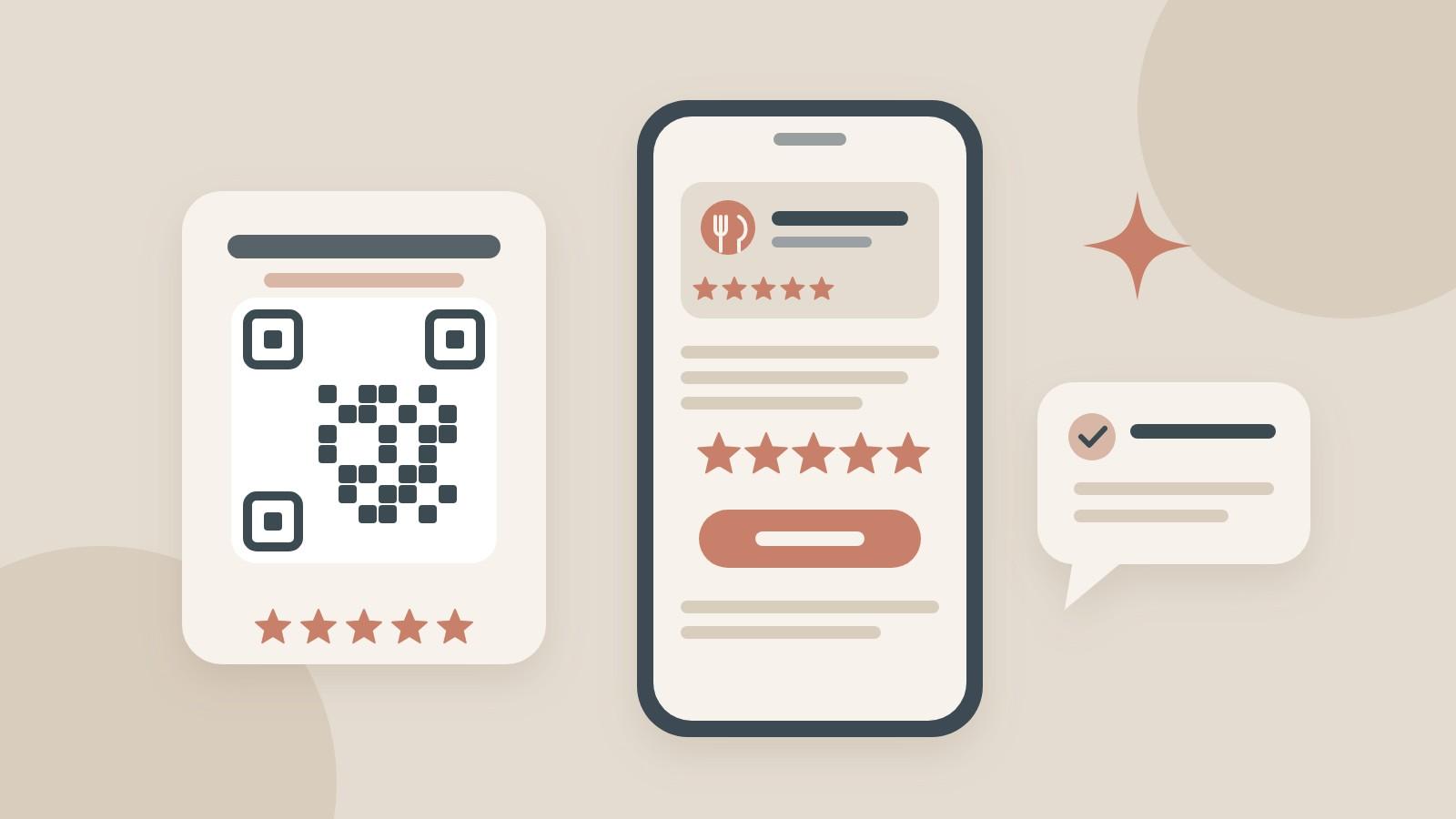
Most happy diners never write a review because nobody asks at the right moment. Here's how to ask every guest, make it one tap, stay inside Google's rules and reply in a way people actually read.
To get more Google reviews for your restaurant, ask every guest, at the moment they're happiest, with a one-tap Google review link or QR code, and never offer anything in return. Then reply to each review in your own words. That's the whole method. The rest is doing it every service without feeling like you're begging.
Reviews matter twice. Guests read them before they pick a place, and Google uses them to decide who shows up in the map results. BrightLocal's February 2026 survey of 1,002 US consumers found that 97% read reviews for local businesses and 47% won't use a business with fewer than 20 reviews.
Key takeaways
- Ask everyone, not only the happy tables. Asking only guests you expect to be positive breaks Google's rules.
- Make it one tap. Google gives every Business Profile a review link and a QR code.
- No discounts, desserts or prize draws for reviews. Google bans it, and so do US and UK rules.
- Recent reviews count most. 74% of consumers only care about reviews from the last three months.
- Reply to every review, in your own voice. Copy-paste replies put off half of diners.
Why do Google reviews matter so much for a restaurant?
Because "where should we eat tonight?" is usually answered on a phone, on Google Maps, in a few seconds. Your star rating, the number of reviews and the latest few comments sit right next to your name.
Google's own help page says the number of reviews and your rating are part of "prominence", one of the three things it uses to rank local results. Studies of local rankings point the same way. A Search Atlas analysis of 3,269 businesses (reported by Search Engine Journal, September 2025) found review count and review text relevance were among the strongest signals after distance. We cover the ranking side in more detail in our guide to restaurant SEO.
Guests are also getting stricter. In the same BrightLocal survey, 68% said they'll only use a business with four stars or more, up from 55% a year earlier. And 31% want 4.5 stars or higher.
Why don't happy guests leave reviews on their own?
Mostly because they forget. They paid, walked out, and the evening moved on. The guests who sit down later and write without being asked are often the ones with a complaint.
So a restaurant that never asks ends up with fewer reviews than it deserves, and a rating that leans toward its worst nights. When you ask, you give the quiet, happy guests an easy way to say what they already think.
When is the best moment to ask for a review?
When the guest has just told you they enjoyed it. That's the natural moment, and it happens every service:
- At the table, when someone says "that was amazing". A simple "Thank you, that means a lot. If you have a minute later, a Google review really helps us" is enough.
- With the bill, on a small card with a QR code. The guest is sitting down, the phone is out, and there's nothing else to do while the card machine comes.
- The next morning, in a short email or text from your reservation system, while the evening is still fresh. Our comparison of reservation systems covers which tools can send these.
- After a takeaway order, with a line on the receipt or in the order confirmation email.
Don't stand over the guest while they type. Google's content policy says businesses must not require or pressure people to leave a review while they're on the premises. Offer the card, then leave them be.
How do you make leaving a review take one tap?
Use the review link Google already gives you. In your Business Profile, open the reviews section and choose "Get more reviews". You can copy a link that opens the review form directly, or download a QR code. Google's help page notes the QR code can only be created in a computer browser, not on a phone.
Put them wherever guests already look:
- A small table card or a sticker on the bill folder.
- The receipt and the thank-you email.
- Your reservation confirmation and reminder messages.
- The "Contact" and "Reviews" sections of your website.
Test it on your own phone first. If it opens Google Maps and asks people to search for you, it's the wrong link.
What are you not allowed to do when asking for reviews?
This is where many restaurants slip, often without knowing. Google's Maps content policy and newer consumer laws are clear:
- No incentives. No free dessert, no discount on the next visit, no entry into a prize draw. Google's help page calls offering free or discounted goods for reviews "strictly prohibited". It also bans incentives for changing or removing a negative review.
- No review gating. You can't ask only the guests you expect to be happy, or send unhappy guests to a private form and happy ones to Google. Google's policy says businesses must not "selectively solicit positive reviews from customers."
- No staff or family reviews. Reviews from current or former employees, relatives or anyone with a business tie count as a conflict of interest.
- No asking staff to name themselves. Google also bans soliciting reviews with specific content, including content that names a staff member. So skip "please mention Ana in your review".
- No buying reviews, ever. That includes "review packages" from agencies.
The law now backs this up. The US Federal Trade Commission's rule on fake reviews, announced on August 14, 2024, bans incentives tied to a positive or negative review and bans threats or intimidation to remove negative ones. In the UK, the fake reviews ban in the Digital Markets, Competition and Consumers Act came into force on April 6, 2025, and the Competition and Markets Authority can fine businesses up to 10% of global turnover.
The safe rule: ask everyone for an honest review, and give nothing in exchange.
How should a restaurant reply to Google reviews?
Every review gets a reply, good or bad. BrightLocal found 89% of consumers expect owners to respond, and 81% expect a reply within a week. Half said templated, generic replies make them unlikely to choose a business, and Google's own tips say not to send everyone the same "thank you".
You don't need templates. You need a shape. For a good review:
- Thank them by name.
- Mention one detail from their review ("glad the grilled octopus was a hit").
- Add something real: a new dish, the terrace opening in spring, the Sunday lunch.
Keep sales talk out. Google asks for replies that are conversational, not promotional, and says not to use replies to offer deals.
For a bad review, slow down. Read it twice, check with the team what happened, and reply within a day or two:
- Thank them for telling you and apologize for the part that went wrong.
- Say what you checked or changed, if anything.
- Offer to continue by phone or email, with a real name.
Never argue in public and never share booking details or anything private about the guest. The person you're really writing for is the next diner reading the reply. If a review breaks Google's rules (spam, hate speech, a review of a different business), flag it from your profile instead of replying angrily.
For setting up the rest of the profile, see our Google Business Profile guide for restaurants. For using feedback inside the business, not only online, read turning guest feedback into growth.
Should you show reviews on your restaurant website?
Yes, a few, with care. A short section with recent Google reviews near the "Book a table" button reassures guests who arrived from Instagram or a friend's link. Link it to your full Google profile so people can see the whole picture.
Don't hand-pick only the glowing ones and present them as typical. UK rules on fake reviews also cover misleading displays of review information, and guests can tell when a page feels curated. Our list of restaurant website must-haves shows where reviews fit on the page.
How many reviews do you need, and how often?
There's no magic number. Get past 20 first, since that's where almost half of consumers draw the line, then aim for a steady flow. Ten new reviews a month for a year looks far better than 100 in one week and then silence.
Here's an example, not a promise. Say you serve 60 tables a week and one table in ten leaves a review after getting the card and the next-day email. That's about six new reviews a week, or roughly 25 a month, without a single freebie.
FAQ
Can I offer a discount for leaving a Google review?
No. Google's policy prohibits free or discounted goods or services in exchange for reviews, even if you don't ask for a positive one. In the US and UK, rewards tied to reviews can also break consumer protection rules. Ask for an honest review and offer nothing.
Is it OK to send unhappy guests to a private feedback form?
You can collect private feedback, but you can't use it to filter who gets the Google link. Google bans selectively asking only positive customers. Offer the review link to everyone, and use a feedback form as an extra, not a gate.
Can my staff or family leave reviews?
No. Google treats reviews from employees, former employees, relatives and business partners as a conflict of interest and may remove them. Staff can help by handing out the review card and mentioning it to guests at the table.
How do I get a fake or abusive review removed?
Flag it from your Business Profile if it breaks Google's content policy, for example spam, a review of the wrong business, or hateful content. Google decides. While you wait, reply calmly and briefly, so other diners see a reasonable owner.
Do review replies help my Google ranking?
Google recommends replying and lists reviews as part of local prominence, but it doesn't say replies themselves raise rankings. The clearer benefit is with guests: 89% expect a reply, and good replies show that someone cares about the food and the service.
Where to start
Today, open your Google Business Profile, choose "Get more reviews" and save the QR code. Print it on a small card for the bill folder, add the link to your thank-you email, and tell the team to mention it when a table says they loved the meal.
If your website doesn't show reviews or make booking easy, our Website Redesign starts from $499. Want a second pair of eyes on your site and profile? Book a call and ask for a free look at your site.
Sources
- BrightLocal, "Local Consumer Review Survey 2026" (Rosie Murphy, February 11, 2026; 1,002 US consumers)
- Google Maps User Generated Content Policy, "Prohibited and restricted content" (accessed November 27, 2026)
- Google Business Profile Help, "Create a Google link or QR code to request reviews" (accessed November 27, 2026)
- Google Business Profile Help, "Tips to get more reviews" (accessed November 27, 2026)
- Google Business Profile Help, "How to improve your local ranking on Google" (accessed November 21, 2026)
- Search Engine Journal, "Review Signals Gain Influence In Top Google Local Rankings" (Matt G. Southern, September 23, 2025; Search Atlas study of 3,269 businesses)
- Federal Trade Commission, "Federal Trade Commission Announces Final Rule Banning Fake Reviews and Testimonials" (August 14, 2024)
- CMS Law, "No more faux five-stars: The DMCC Act bans fake reviews" (April 17, 2025)

Djaner Bekir · Founder of Art of The Code. 15+ years in destination management, now building websites for hotels and restaurants. About
Want a website that turns lookers into bookers?
Related posts
 Guest marketing8 min read
Holiday Checklist: Update Your Hotel Website for December
 Guest marketing7 min read
Winning the Experience Generation
 Guest marketing7 min read
First-Party Data: A Boutique Hotelier’s Secret Weapon