Hotel Website Redesign: Our Process from Brief to Launch
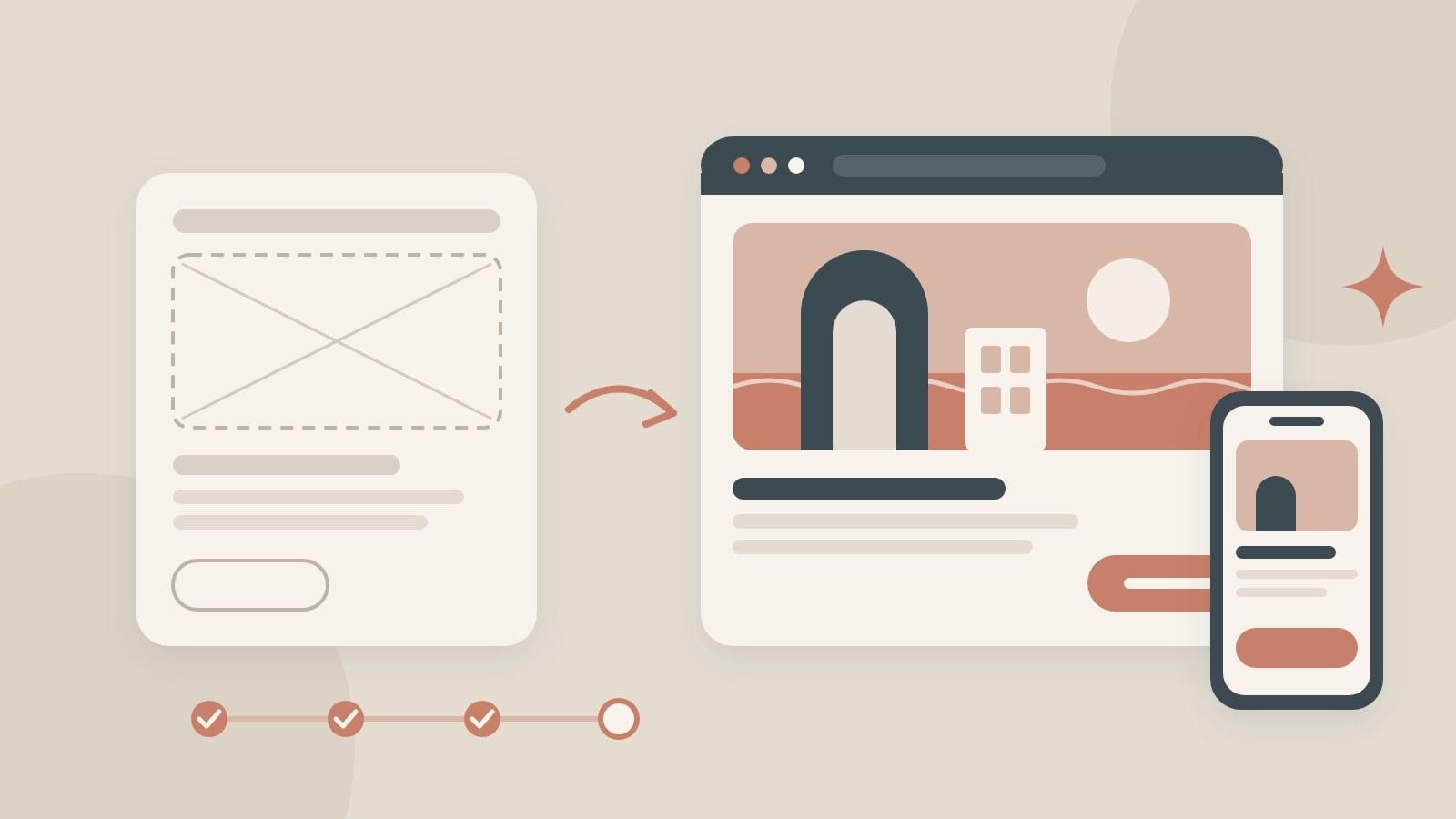
The four stages of a hotel website redesign, what happens in each one, what we need from you, and how to launch without losing your Google rankings.
A hotel website redesign runs in four stages: discover, design, develop, then launch and grow. First we learn how you sell rooms today and what the new site has to do. Then we plan the pages and design them as a prototype you can tap through on your phone. Then we build it, connect your booking engine and move the old site over without losing what Google already knows about you.
Most hotel owners don't buy a website often, so the process can feel like a black box. Here are the same four steps we show on our services page, what we need from you in each, and the checks that protect your bookings on launch day.
Key takeaways
- Discovery comes first: how guests find you, how they book, and what's broken on the current site.
- You see the design as a clickable prototype on your own phone before any code is written.
- Start gathering photos, room facts and logins early. Content is the part of the project that waits on you.
- Every old page gets a permanent redirect to its new match. Google says to keep them for at least a year.
- Launch is the start of the work. Watch how guests reach the booking engine and keep the site current with the seasons.
Why redesign a hotel website at all?
Your website is where a guest decides to book with you or go back to the OTA. Plenty of guests find a small hotel on Booking.com and then look it up. If your site is slow or hides the booking button, they book where they started.
Phones make this sharper. Net Affinity, which builds hotel websites and booking engines, reported that mobile made up 67% of bookings across its UK, Ireland and Northern Ireland clients in Q4 2025. For the UK on its own the figure was 51%. A site designed for a desktop screen a few years ago is now mostly seen on a phone.
Signs it's time: the site looks older than your rooms, you can't change photos yourself, or the booking engine opens on a page that looks nothing like your hotel.
What happens in the discovery stage?
Discovery is where we learn your hotel before anyone designs anything. We talk about your guests, your goals and how you sell today: who books, from which countries, through which channels, and how much of that you'd like to move to direct.
We look at the current site too: which pages get visits, how guests reach the booking engine, where it breaks on a phone, and what Google has indexed. Access to Google Analytics and Search Console helps. Without them, we work from the site and from what you tell us.
The result is a short list of what the new site must do. For a small hotel that might read: get more guests from the homepage to the booking engine, show every room type clearly, answer the questions reception keeps getting by email, and work in two languages.
How do you plan the pages and content?
Next comes the site structure, a list of every page and what it's for. Most hotel sites need a homepage, a rooms page with one page per room type, a location or local guide page, an offers page, a contact page and the legal pages. A restaurant, spa, events or weddings get their own pages if you sell them.
For each page we write down the headline, the photos, the facts and the one thing we want the guest to do next. That's the content plan. It shows you early which text and photos are needed.
Content is the part that waits on you, so here's what to start collecting:
- Photos of every room type, the views, breakfast, the common areas and the street. Our hotel photography shot list covers what to shoot.
- Room facts: size, bed types, maximum guests, view, bathroom and what's included.
- Policies: check-in and check-out times, cancellation, children, pets and parking.
- Logins for your domain, current hosting, booking engine and Google Business Profile.
- Logo files and any brand colors you already use.
If you're still deciding what the new site should include, our list of features boutique hotel websites need is a good place to start.
What does the design stage look like?
We start with wireframes: plain gray layouts that show where things sit on each key page, with no colors or photos yet. They're quick to change, so this is the cheapest moment to move things around.
Then comes the full design for desktop and mobile, with your photos, colors and fonts. If your package includes branding, the logo and brand identity are designed in this stage, so the site and the brand come out matching.
You review it as a clickable prototype. Open it on your phone and tap from the homepage to a room to the booking button. Does it feel like your hotel? This is the best time for feedback, because a change in a prototype takes minutes. The same change after the build takes longer.
We look hardest at the parts that sell rooms. The homepage has to say where you are and what the stay is like within seconds, with a booking button in view (see our post on hotel homepage design). Room pages have to answer the questions guests ask before they pay.
What happens when the site is built?
The build turns the approved design into a working website that's fast, accessible and ready for search.
For speed we check Google's three page experience scores (LCP, INP and CLS). Google's web.dev guidance counts a page as good when its main content appears within 2.5 seconds, it reacts to a tap within 200 milliseconds, and its layout shift score stays at 0.1 or less, measured at the 75th percentile of visits. On hotel sites, big hero photos and booking widgets are the usual trouble spots.
For accessibility we work to WCAG 2.2 level AA, the W3C standard published in October 2023. In practice that means readable text contrast, buttons that work with a keyboard, alt text on photos and forms with clear labels.
For search, every page gets a title and description, the site gets a sitemap, and structured data tells search engines the site belongs to a hotel. Our hotel schema markup guide shows what that code looks like.
This is also when we connect your booking engine or reservation tool. If you're happy with yours, we integrate it and make the path to it clear from every page. Thinking of switching? Our booking engine buyer's guide lists what to check first.
How do you launch without losing Google rankings?
With redirects. A redesign often changes page addresses, so /rooms.html might become /rooms/sea-view-double. Every old address needs a permanent redirect to its new match. Without one, a guest or a search engine that follows an old link lands on an error page.
Google's guide to site moves lays out the steps:
- Map every old URL to its new one, starting with your most visited pages.
- Use permanent server-side redirects (301 or 308), and point each one straight at the final page instead of through a chain.
- Submit the new sitemap in Google Search Console and watch the old addresses drop out of the index.
- Keep the redirects as long as you can. Google's guide says usually at least a year.
Google also warns that rankings can move around for a while during the change, and that a medium-sized site can take several weeks or more to settle. That's normal. Launching in your quiet season gives it room to settle before the busy months.
Before we switch over, we run a launch checklist: test bookings on a phone and a laptop, contact forms that land in the right inbox, analytics and cookie consent, every redirect, and a backup of the old site.
What happens after launch?
This is the "grow" part. In the first weeks we watch Search Console for errors and check that Google picks up the new addresses. We look at how many guests reach the booking engine and fix what slows them down.
After that, the site needs seasonal offers, new photos and updated prices, like the hotel itself. You work with the same person who built it.
How long does a hotel website redesign take?
It depends on scope. A small site moves faster than a multilingual one with a new brand and a booking engine to connect. Content matters too: a project with photos and room facts ready moves faster than one waiting on a photo shoot. You get a timeline with your quote, and we agree on it before work starts.
How much does a hotel website redesign cost?
Our Website Redesign package starts at $499. It gives your existing site a new design that's mobile-friendly and fast, with SEO basics (titles, descriptions, sitemap) and a contact or booking form. Brand & Website starts at $799 and adds logo and brand identity. Premium starts at $1,099 and adds a social media design kit and Google Business Profile setup. Our boutique hotel website cost guide explains what moves the final price.
Frequently asked questions
Will a redesign hurt my Google rankings?
It can for a short while if page addresses change, and Google says rankings may move around during a site move. Redirecting every old page to its new match, keeping those redirects for at least a year and submitting a new sitemap helps Google switch over cleanly.
Can I keep my current booking engine?
Usually, yes. We integrate the booking engine or reservation tool you already use and make the way to it clear from every page. If it's slow on phones or hard to match to your design, we'll say so, and you decide whether to switch now or later.
What should I prepare before a website redesign?
Photos of every room type and the common areas, room facts, your policies, logo files, and logins for your domain, hosting, booking engine and Google Business Profile. Having these ready before the project starts is the simplest way to keep it on schedule.
The bottom line
A redesign is less of a mystery once you see the steps: learn how you sell, plan the pages, test a prototype, build, connect the booking engine and redirect every old address.
Your one action today: make a folder called "website" and start putting photos, room facts and logins in it. Whoever builds your next site will ask for them first.
Thinking about a redesign? Book a call and ask for a free look at your site.
Sources
- Net Affinity, "How Mobile Booking Will Dominate the Hotel Industry in 2026" (January 29, 2026)
- Google Search Central, "Site moves with URL changes" (last updated September 11, 2026)
- web.dev, "Largest Contentful Paint (LCP)" (last updated September 4, 2025)
- web.dev, "Interaction to Next Paint (INP)" (last updated September 2, 2025)
- web.dev, "Cumulative Layout Shift (CLS)" (last updated April 12, 2023)
- W3C, "Web Content Accessibility Guidelines (WCAG) 2.2" (W3C Recommendation, October 5, 2023)

Djaner Bekir · Founder of Art of The Code. 15+ years in destination management, now building websites for hotels and restaurants. About
Want a website that turns lookers into bookers?
Related posts
 Trends & design9 min read
Boutique Hotel Branding: Logo, Color and Voice That Fit
 Trends & design7 min read
Stop Uploading PDF Menus: Design a Menu for the Web
 Trends & design9 min read
Hotel Photography That Sells: A Shot List for Your Website