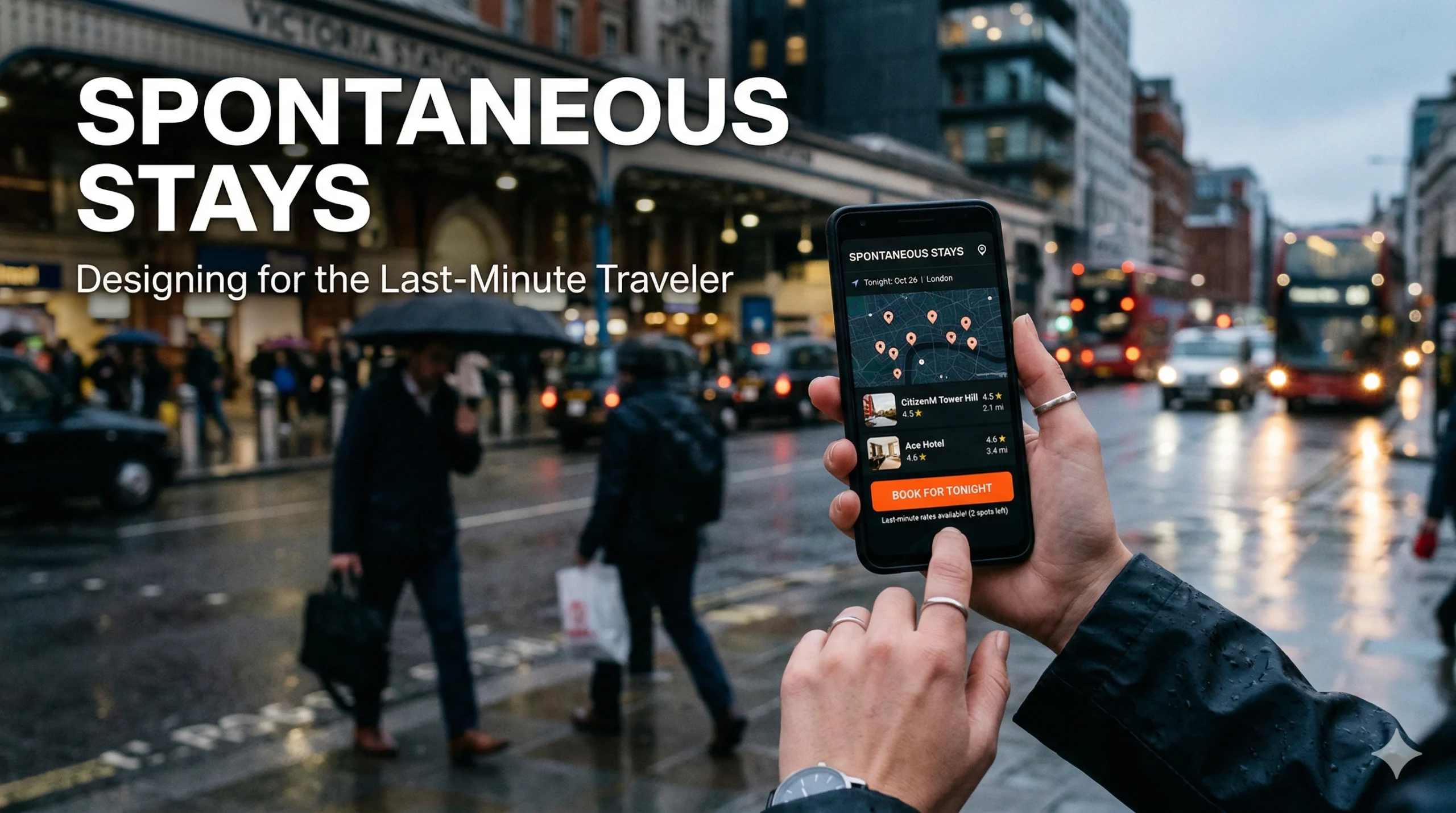
Last-minute travel is growing fast and it is full of chance. Many guests book on a whim, want speed, and care about clear value. This article explains how hotels and platforms can design for spontaneous stays, from booking to check-out, so you can capture more revenue and create quick, memorable stays.
We will cover product design, pricing, operations, and marketing with practical steps you can act on. Read on for clear ideas and simple changes that make a big difference for last-minute bookers.
Why it matters
Last-minute travelers are a growing group. Many people travel for work, events, or sudden plans and they often decide in hours or a day. That means there is real revenue available if you move fast and design for them. The market rewards speed and clarity.
They behave differently from planners. They search on phones, compare quickly, and pick a provider that removes friction. This makes the booking experience more important than ever. A smooth path can turn a casual browser into a paying guest within minutes.
Serving last-minute guests also raises expectations for operations. Staff must be ready to check in guests quickly, adjust inventory, and communicate clearly. The reward is higher occupancy and happier guests who often leave good reviews when things go right.
Booking flow
Design a booking flow that feels fast and natural on mobile. Most last-minute bookers are on phones and they want to finish in a few taps. Reduce steps, show clear prices, and keep required inputs to a minimum. Make the process feel friendly and confident.
Start by simplifying the initial screen. Show only the most important details: price, arrival time, and room highlights. Guests should see what matters without scrolling. Clear action buttons help them move quickly.
Below is a list of specific features you can add to speed up bookings. Each feature reduces friction and helps travelers decide fast.
- One-tap booking: Allow returning guests to book with saved info. This cuts time and builds loyalty.
- Smart defaults: Preselect common options like one adult and no extras. Guests can change if needed, but defaults speed the flow.
- Real-time availability: Show live rooms and exact counts. Don’t promise rooms you don’t have.
- Clear total price: Include taxes and fees early. Surprises kill conversion.
- Flexible check-in times: Offer early check-in or self check-in when possible. This appeals to travelers who arrive at odd hours.
After you add these features, test the flow with real users. Watch how quickly they complete booking and where they hesitate. Small UX tweaks often yield big gains.
Pricing
Price must feel fair and flexible. Last-minute travelers compare options fast. They choose the offer that gives the best value now. This means your pricing strategy should balance urgency and profitability.
Use short-window discounts and value bundles to attract quick decisions. A small discount for same-day bookings or a package with breakfast can move hesitant guests. Keep the messaging clear so value is obvious at a glance.
Here are common pricing tactics that work well for spontaneous stays. Each tactic is simple to implement and easy to test.
- Flash rates: Limited-time deals that expire within hours. They create urgency without heavy discounts.
- Dynamic pricing: Adjust rates by demand and occupancy. Use simple rules so you can explain prices to staff easily.
- Package deals: Combine room plus a late check-out or breakfast. Bundles add perceived value.
- Last-room premiums: Charge more when inventory is very low, but balance with discounts to avoid scaring away price-sensitive guests.
- Transparent fees: Show the total price early. Avoid hidden charges that kill trust.
When testing prices, track conversion and revenue per available room. Measure short-term wins and long-term guest behavior. Some promotions win bookings now and bring repeat guests later.
Arrival experience
Guests who book late want a smooth arrival. They often arrive tired or in a rush. Make check-in quick and clear. A calm arrival sets the tone for the whole stay.
Prepare staff and systems to handle rapid check-ins. Train teams to prioritize speed without losing warmth. Many guests remember kindness and speed more than luxury details.
Below is a list of arrival features that improve the guest entry and first impression. The list focuses on practical steps you can adopt immediately.
- Express check-in: Allow guests to check in online and skip the desk when possible.
- Digital room keys: Send mobile keys so guests can access rooms instantly.
- Pre-arrival messages: Send a short SMS with arrival instructions and parking notes.
- Welcome kit: Offer a simple welcome note or snack for same-day arrivals to show care.
- Clear signage: Make it easy to find the entrance, elevators, and reception at night.
Each of these small touches reduces friction and improves satisfaction. They also lower staff load during busy times and reduce bottlenecks at the desk.
Marketing to spontaneous travelers
Marketing for last-minute guests is mostly about timing and channel. Reach them where they are: social media, mobile search, and apps. Ads and messages should be short, visual, and tied to a clear offer.
Use targeted messaging that highlights speed and simplicity. Phrases like “same-day availability” or “book in minutes” work well. Keep messages honest and make value clear quickly.
Here are practical campaign ideas to reach spontaneous travelers. Each idea focuses on quick action and clear incentives.
- Mobile search ads: Bid on terms that show urgent intent, like “hotel tonight” or “rooms near me now.”
- Push alerts: Send offers to app users when you have unsold rooms. Time them for peak decision hours.
- Social stories: Use short, timely stories to showcase availability and price. Stories feel immediate and work well for last-minute decisions.
- Email flashes: Send limited-time offers to segmented lists, such as nearby subscribers or recent guests.
- Partnerships: Work with rideshare or local venues to show last-minute options to relevant audiences.
Always measure cost per booking and return on ad spend. Refine audiences and creatives based on what converts fastest. Small tweaks in timing often change results a lot.
Technology and operations
Tech makes or breaks a last-minute stay. Systems must sync in real time so availability, pricing, and guest data stay accurate. Pick tools that are fast and reliable and that reduce manual work for staff.
Operationally, create simple rules for overbookings, upgrades, and room assignments. Clear playbooks let front-desk staff act fast and keep guests happy. Train teams so they can make good decisions without long approvals.
Here is a short list of tech and ops priorities to support spontaneous stays. Each item improves speed and lowers errors in booking and arrival.
- Real-time PMS integration: Keep availability and rates synced across channels instantly.
- Mobile-first checkout: Let guests sign and pay on their phones with simple flows.
- Automated messaging: Use templates for confirmations, directions, and arrival tips to save staff time.
- Inventory alerts: Notify revenue managers when occupancy thresholds are reached so they can adjust pricing fast.
- Staff playbooks: Short, clear procedures for quick check-in, upgrades, and guest issues.
At Artofthecode we focus on practical product and operations patterns that scale. Small automation and clear rules let teams act fast and keep guests happy. This lifts revenue and reduces stress for staff.
Key Takeaways
Design for last-minute travelers by making booking fast, clear, and mobile-friendly. Reduce steps, show total price early, and offer simple value like early check-in or small bundles. These moves increase conversion and satisfaction.
Use pricing tactics like flash rates and packages to convert urgent demand. Be honest and transparent so trust grows. Test often and measure both conversion and revenue per available room to find winning offers.
Streamline arrival with express check-in, digital keys, and clear messaging. Equip staff with short playbooks and use automation to handle routine tasks. Technology that syncs in real time is key to avoiding errors.
Marketing should meet travelers when they decide. Use mobile search, push alerts, and social stories to reach people who want to book now. Measure what works and scale the channels that bring low-cost bookings.
Start with small experiments and iterate. Focus on speed, clarity, and simple value. Those steps help you win spontaneous stays, fill rooms, and create quick, positive guest experiences.