Guests want more than a bed. They want memory making, easy planning, and a taste of the place they visit. This article explains how hotels and small stays can create, sell, and run local experiences that raise revenue and make guests happier. Read on for clear steps, practical tips, and simple tools to get started.
Why local experiences add value
Local experiences change how guests see a stay. When you offer a guided walk, a cooking class, or a private tour, you add a reason for guests to book with you. This helps fill rooms and brings extra revenue beyond the nightly rate.
Guests are willing to pay for convenience and authenticity. They want things that feel unique and easy to book. When your property sells these experiences directly, you keep more profit and control the guest journey from start to finish.
Offering experiences also builds stronger guest relationships. People who try local activities at your property feel cared for. They leave better reviews, return in the future, and tell friends about their time with you.
Finally, experiences can differentiate your brand. In a crowded market, the right activities can make your property stand out. This gives you a clear message for marketing and helps attract the right guests for your location.
Design experiences that sell
Start with the guest in mind. Think about who stays with you and what they want to do. Business travelers may want short, high-quality experiences. Families often look for safe, fun activities. Couples may seek romantic or private options.
Look at local strengths next. What do people come to your town for? Nature, food, history, or culture? Match experiences to those strengths. Simple, well run activities work better than complex ideas that require heavy logistics.
Below is a short list of popular types of local experiences to consider. Read the line above for context and choose options that match your guest profile and local assets.
- Food tours and cooking classes that showcase regional dishes
- Guided nature walks, birding trips, or low-impact adventure outings
- Art or craft workshops led by local makers
- Historic or cultural tours with a local expert
- Wellness sessions like sunrise yoga, meditation, or mindful walks
Each of these ideas can be scaled up or down. Test a small offer first and refine it. Ask guests for quick feedback after the activity to learn what works and what needs change.
Think about accessibility and safety as you design experiences. Clear instructions, trained guides, and simple booking terms reduce guest anxiety and lower your risk. A smooth, safe experience builds trust and repeats business.
Package and price for profit
Pricing is a balance between value and cost. Start by mapping your direct costs: staff time, materials, transport, and any partner fees. Add a margin that covers overhead and leaves room for profit. Keep prices simple and clear.
Bundling is a strong tool. Package a room with an experience to increase the average booking value. Offer a tiered approach: a base package, a premium option, and an add-on. Guests like choices that are easy to compare.
Before a list, here is a short explanation of pricing tactics. Use these tactics to set clear, flexible, and appealing prices that suit different guest types and seasons.
- Dynamic add-ons: Offer experiences as bookable extras during the booking flow
- Prepaid bundles: Discount the experience when bought with a room to lock in revenue
- Limited edition offers: Run short-term experiences to create urgency
- Membership or loyalty perks: Give repeat guests exclusive access or discounts
- Pay-per-person vs flat fee: Choose the model that best fits the activity and margins
Communicate value clearly in all pricing. Describe what is included and any limits on group size or timing. The easier it is to understand, the more likely guests will say yes.
Use simple payment terms. Allow guests to pay when they book or at check-in. Clear refund and cancellation rules reduce disputes and protect your cash flow.
Market locally and online
Marketing must connect the experience to the guest’s travel reason. Use short, clear copy and photos that show people enjoying the activity. Focus on benefits: what the guest will feel or gain, not just what they will do.
Place offers where guests already search. Add experiences to your booking engine, property website, and booking confirmation emails. Train front desk staff to mention activities at check-in. These small steps increase awareness and spur last-minute sales.
Here is a short lead-in before a list of effective channels. These channels reach guests directly and let you keep more revenue compared to third-party platforms.
- Property website and booking flow so guests can add experiences at reservation
- Confirmation and pre-arrival emails with clear calls to action
- Front desk and concierge upsells at check-in or via mobile messaging
- Social media posts and short videos showing the activity in action
- Local tourism offices and visitor centers that recommend experiences
Use simple tracking to measure which channels lead to bookings. Add a short code or promo to each channel to see what works best. Then focus effort on the top performers.
Partner content with local businesses to share costs and reach. Co-marketing can put your experiences in front of more visitors and build strong local ties.
Run operations and form partnerships
Good operations make or break an experience. Create clear schedules, checklists, and safety plans. Train staff and partners on guest interaction, timing, and what to do if plans change. Practice helps avoid last minute problems.
Partner with trusted local providers when you need skills or scale. Partners can be guides, chefs, artists, or transport companies. Make simple agreements that define pay, liability, and who handles bookings.
Below is a brief explanation and a list of partner types to consider. Choose partners who share your service values and who can deliver consistent quality for guests.
- Local guides and tour operators who know routes and stories
- Restaurants and food makers for culinary experiences
- Artists and instructors for hands-on workshops
- Transport providers for safe and reliable guest movement
- Wellness professionals for yoga, massage, or guided meditation
Create shared standards with partners. Agree on guest arrival times, equipment, pricing, and how to handle cancellations. Regular check-ins keep everyone aligned and reduce friction.
Record all feedback and operational notes after each event. Use this data to tweak timing, group size, and staffing so every experience gets better and more profitable over time.
Measure results and improve
Track simple, useful metrics to see if experiences are working. Look at revenue per booking, uptake rate (how many guests add an experience), guest satisfaction scores, and repeat bookings. Small, clear numbers tell a clear story.
Collect guest feedback right after the activity with a short survey or quick exit question. Ask what they liked and where they saw room for improvement. Quick feedback is easy for guests and actionable for you.
Before listing KPIs, here is a short explanation. Use these key performance indicators to learn fast and make changes that matter to guests and your bottom line.
- Revenue per available room including experience add-ons
- Attach rate or percentage of bookings that include an experience
- Net promoter score or simple guest rating after the experience
- Repeat guest rate among those who bought an experience
- Partner performance metrics like on-time start and guest complaints
Use these metrics to decide what to keep, change, or stop. Small experiments help you find the right price, partner, and promotion that work for your property.
Report results monthly and share them with staff and partners. When everyone sees the impact, it builds momentum and new ideas that grow revenue over time.
Key Takeaways
Selling local experiences is a clear way to boost revenue and guest satisfaction. Start small, focus on what your guests want, and make offers easy to buy. This approach helps you keep more profit and give guests a memorable stay.
Design simple, safe experiences that match local strengths. Price them clearly, bundle them with rooms, and market them where guests already look. Use partners to expand your options without heavy investment.
Measure the right numbers, collect quick feedback, and refine your offers. With steady testing and good operations, experiences become a lasting revenue stream and a reason guests choose you again.
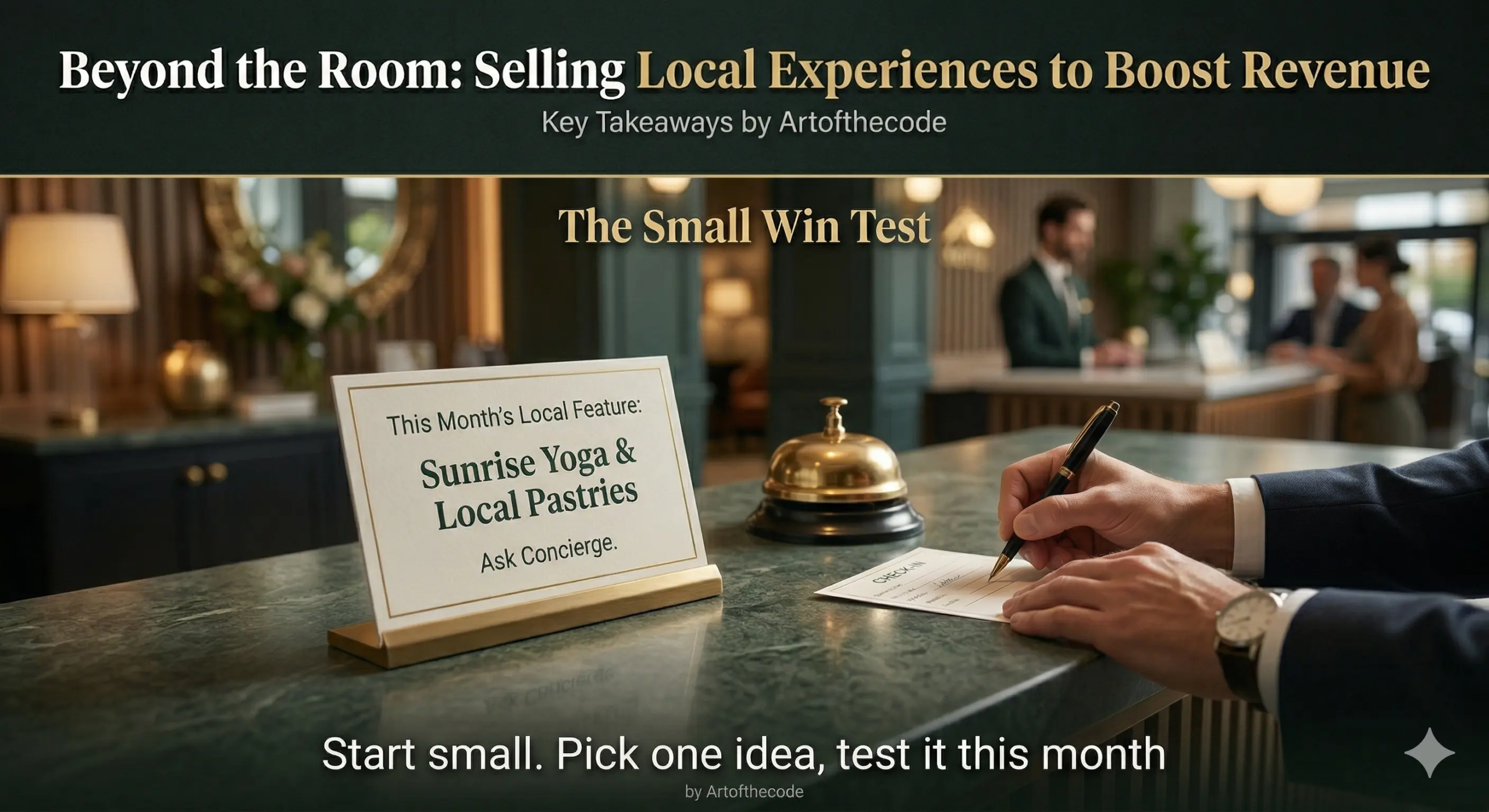
Artofthecode encourages properties to take practical steps today. Pick one experience idea, test it this month, and build from real guest feedback. Small wins lead to bigger gains.