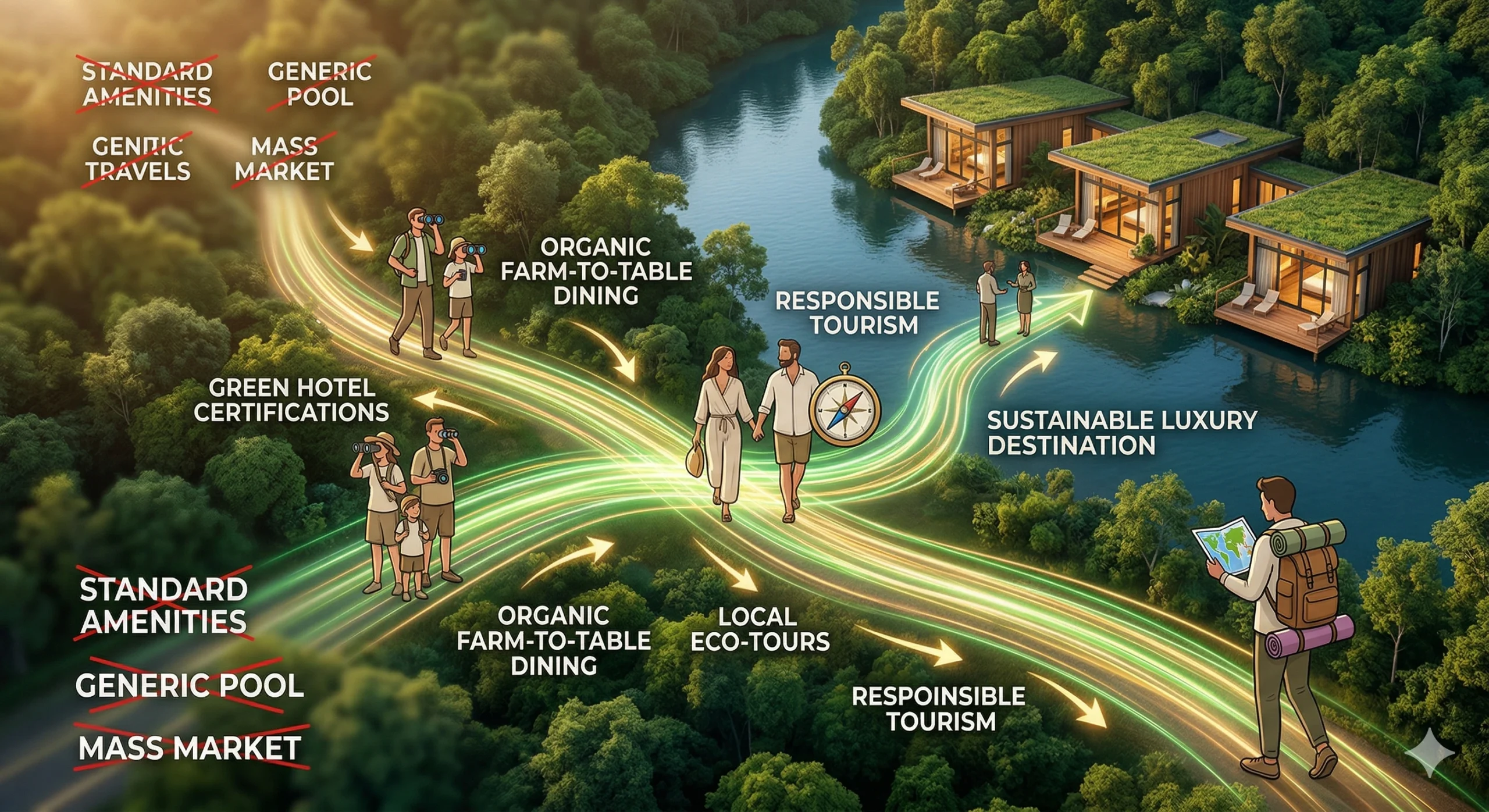
Eco-conscious travelers want luxury that cares for the planet. This short guide shows clear SEO steps to attract those guests. It is practical, upbeat, and written for busy hoteliers and marketers. This guide is tailored for Artofthecode and focuses on simple, tested ideas you can use now.
Why eco-luxury matters
Luxury travelers who care about sustainability spend more time researching where they stay. They want proof that a high-end property respects the environment. If your site shows real actions, you can win trust quickly. This trust turns browsers into guests.
Search engines spot content that answers real questions. When you write plainly about your green practices, you rank for the terms these guests use. That increases your visibility to a focused group who book more often and stay longer.
Sustainability is also a chance to stand out. Many luxury hotels say they are green, but few explain the details and results. Clear, honest content builds authority. That authority helps both organic search and direct bookings.
Define your audience
Start with a clear picture of your ideal guest. Think about age, travel goals, spending power, and values. Are they honeymooners, business travelers, or families who want lower impact stays? Write this down. It guides your keywords and messages.
Also map the questions your guests ask. Where do they look for proof? What certifications matter to them? What activities or amenities do they value? Use real words they say. This shapes content that ranks and converts.
Keep the language warm and simple. Eco-luxury guests prefer clear claims. They like facts, not fluff. Short case examples and guest stories help make your claims real.
Keyword strategy
Keywords help search engines connect the right guests to your property. Start with a small group of focused phrases. Pick terms that mix intent with specificity. These bring visitors who are ready to book.
Below is a practical list of keyword types to target. Each type serves a clear purpose in your funnel. Use these ideas to build pages and blog posts that match what guests search for.
- Primary intent keywords: terms like “sustainable luxury hotel” or “eco-friendly boutique resort”. These show clear booking interest.
- Local intent keywords: combine sustainability with location, such as “eco resort Bali” or “green hotel Napa”.
- Informational keywords: questions and guides, for example “what is a carbon neutral hotel” or “sustainable luxury travel tips”.
- Long-tail phrases: detailed searches like “luxury hotel with solar power and spa”. These can convert well.
- Brand plus promise: include your hotel name with green claims, such as “[Hotel Name] sustainable practices”.
After you choose keywords, map them to pages. Each high-value phrase should have a dedicated page or a clear section on an existing page. Avoid stuffing many different intents on one page. Keep pages focused and useful.
Content ideas for sustainable stays
Great content answers guest needs and shows your values. Focus on clarity. Use short stories and real examples. Show proof like numbers, photos, and certifications where possible. Keep each piece readable and friendly.
Below are content types that work well for eco-luxury guests. Each type has a role in search and booking. Use a mix on your site to cover research, planning, and booking stages.
- Feature pages: Pages that explain your green systems, like energy, water, waste, and sourcing. Make them factual and transparent.
- Guest stories: Short narratives from guests about the stay and the impact they felt. These build trust and emotion.
- Local guides: Show sustainable experiences nearby, such as farms, conservation areas, and low-impact tours.
- Behind-the-scenes posts: Walk readers through your processes, such as how laundry is done or how you source food.
- Certification pages: Detail certificates and audits, what they mean, and how you meet them.
Keep all content scannable. Use headings, short paragraphs, and lists. That helps both readers and search engines. Maintain a friendly tone and clear calls to action that match guest intent.
On-page SEO and trust signals
On-page SEO helps engines and guests understand your message. Use primary keywords in titles, meta descriptions, and headers. But keep the language natural. Overuse of keywords harms readability and trust.
Below is a short list of trust signals to add to relevant pages. Each signal helps guests feel safe and confident. Display them clearly, not hidden in small print.
- Certifications and badges: Show names, logos, and short explanations. Say what they test and why they matter.
- Impact data: Share clear numbers such as energy saved or percentage of local food used.
- Guest testimonials: Use short quotes that mention sustainability and comfort.
- Staff stories: Introduce team members who manage green programs. That humanizes your efforts.
Use schema markup where it fits, such as for reviews and FAQs. This helps search engines show rich results. But do not hide facts. Be honest and specific. Honesty improves long-term trust and search visibility.
Technical and local SEO
Technical SEO makes sure your site loads fast and is easy to use. Luxury guests expect smooth experiences. Slow sites hurt rankings and booking conversion. Focus on speed and mobile usability first.
The next list highlights technical checks that matter most for hotels. Each check is simple to understand and worth tracking over time. Prioritize fixes that impact both speed and user experience.
- Page speed: Compress files, use caching, and serve optimized assets to reduce load times.
- Mobile friendliness: Make sure booking forms and menus work well on phones and tablets.
- Structured data: Add schema for local business, reviews, and FAQs to help search engines display rich snippets.
- Secure site: Use HTTPS and keep certificates current.
- Clear crawl paths: Ensure search engines can find and index your key pages, including sustainability pages.
For local SEO, claim and optimize your local listings. Use consistent name, address, and phone format. Mention sustainable highlights in your local profile. This helps search and local discovery for eco-minded guests planning near your area.
Guest experience and storytelling
Guest experience is central to both reputation and SEO. A great stay leads to positive reviews and organic social mentions. These signals help search engines and encourage direct bookings.
Before listing tactics, here is a short lead-in explaining their role. These tactics are practical steps you can take to link sustainability to guest comfort. Each one boosts word of mouth and search credibility.
- Personal touches: Offer simple, sustainable amenities with clear explanations. For example, show how refillable bath products reduce waste.
- Guided tours: Run small tours or short talks about your green systems. Invite guests to see solar arrays or composting sites.
- Clear labeling: Label menu items and services that are locally sourced or low impact.
- Follow-up emails: Send a friendly note after checkout asking for feedback and a short review about the stay.
Good storytelling links a guest’s comfort to your green choices. Use simple narratives and concrete facts. That makes your message memorable and shareable.
Measure and refine
Track what works. SEO is not a one-time task. You must review data and tweak content. Simple metrics tell a clear story about what guests search for and how they behave on your site.
Here is a short list of key metrics to watch. These metrics show both search performance and guest interest. Review them monthly and adjust focus based on trends.
- Organic traffic: Look at pages that bring the most visitors and the keywords used to find them.
- Conversion rate: Track booking completions from sustainability pages and related landing pages.
- Engagement: Monitor time on page and bounce rate to see if content holds attention.
- Local visibility: Check impressions and clicks in local search and map listings.
- Reviews and sentiment: Read guest reviews for mentions of sustainability and comfort.
Use small experiments when you change content. Update a page, then watch performance for a few weeks. Keep the wins and learn from the pages that need work. Over time, steady improvements add up to more bookings.
Key Takeaways
Sustainable stays attract a clear and valuable audience. Use honest, simple content to show your green actions. That builds trust and improves search performance. Keep your language plain and focused on facts.
Pair keyword focus with real proof. Map keywords to pages and create content that answers guest questions. Add trust signals and technical fixes to make your site fast and credible.
Finally, measure results and adjust. Small, steady changes give better outcomes than big, unfocused pushes. Use these steps to reach eco-conscious luxury guests and turn interest into bookings.
Thank you for reading. Put one or two ideas into action this week and track the results. Artofthecode supports clear, practical strategies that help properties grow with integrity.