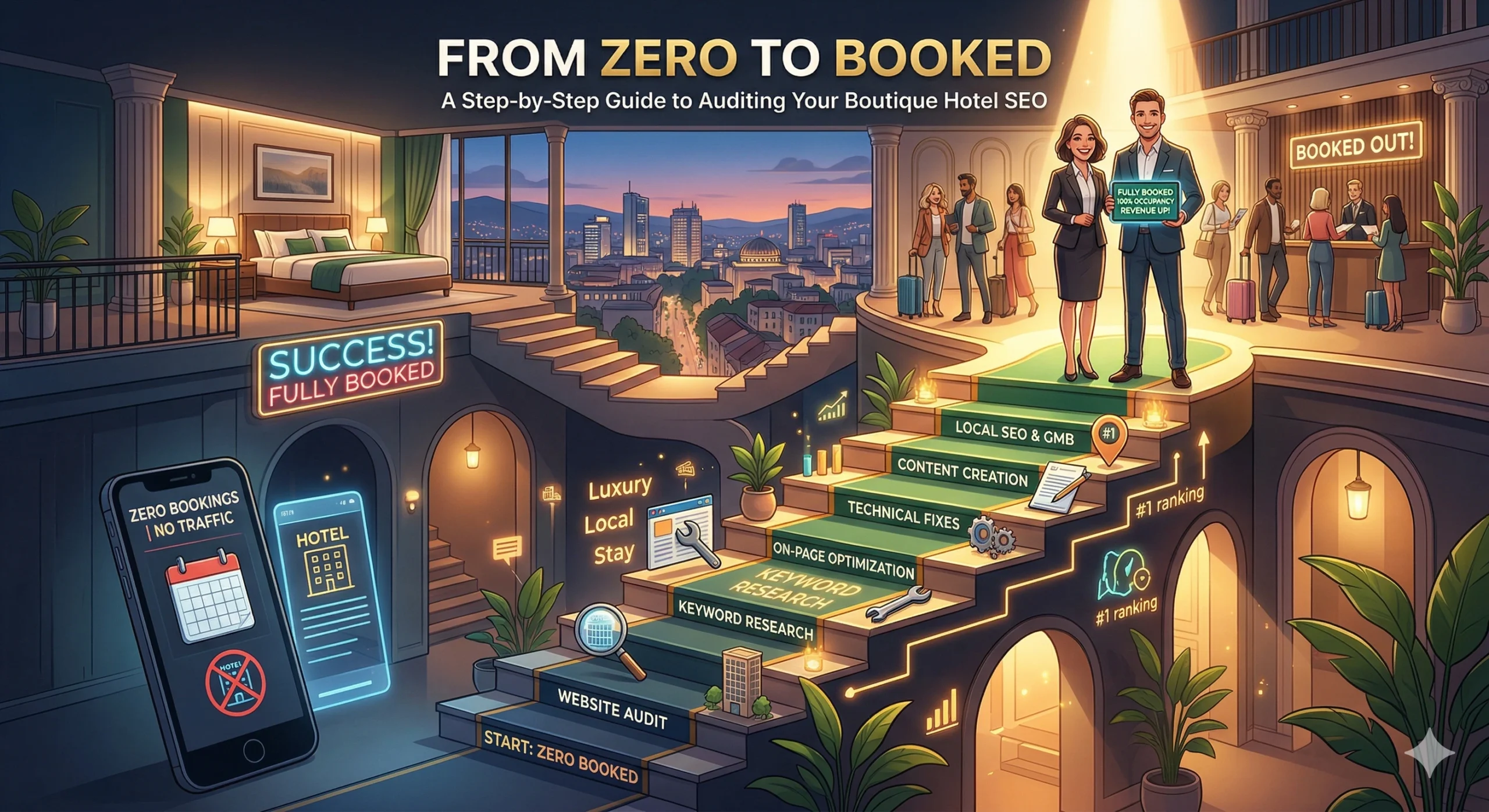

Good hotel content converts visitors into guests. This piece explains how to use LSI and semantic SEO to make pages that search engines trust and people enjoy. You will get clear steps you can apply today to improve hotel pages or any site.
Why LSI and Semantic SEO Matter for Hotels
Search engines aim to find the best match for a user question. For hotels, that means pages must show clear context and related phrases. Using related words helps search engines see that your page covers the topic fully.
Travelers use many ways to describe a stay. They search by location, room features, nearby sights, and feelings like “quiet” or “family friendly”. A page that uses only one phrase misses many of these intent signals.
When you include related terms and natural language, your page can rank for more queries. That increases traffic from relevant visitors who are closer to booking. It also reduces bounce rate because the content matches user intent.
Good semantic optimization is not gaming the system. It is about writing richer content that answers more questions. That can lead to higher clicks and more bookings for your hotel site.
How to Find the Right Keywords
Start with a simple seed list. Think of your hotel’s name, the neighborhood, and the main features. Add common booking phrases such as “best hotel near” or “family rooms”. This creates a base for more work.
Next, expand that list with related phrases. Look for symptoms of intent, like “pet friendly policy” or “free airport shuttle”. Think in terms guests use when planning a trip. This helps you cover many real search queries.
Here is a short set of ideas to use when expanding keywords. Each item is a pattern you can apply to your hotel pages.
Use these patterns to build phrases that match guest intent:
- Location plus need: “downtown hotel near convention center”
- Feature plus audience: “boutique hotel for couples”
- Service plus convenience: “hotel with free parking”
- Event queries: “wedding venues near me”
After you build a list, group keywords by page intent. Put booking intent on room pages and discovery intent on neighborhood or attraction pages. Grouping helps you avoid mixing subjects that confuse search engines.
Writing Content That Signals Relevance
Your writing should answer common questions. That means clear headings, short sections, and practical details. Guests want facts like check-in time, breakfast hours, and transit options. Give them those answers up front.
Use related words naturally in paragraphs. Instead of repeating the same phrase, use close variants and synonyms. For example, swap “breakfast included” with “complimentary morning meal” and “free continental breakfast”. This helps search engines link ideas together.
Before a list, add a short paragraph that explains why the list matters. Then add a clear lead-in sentence to the list. This gives context for both readers and search engines.
Here is a common set of content elements to include on a room page. Write a small intro, then list the elements you will cover:
- Room features and bed types
- Price ranges and any fees
- Photos and view descriptions
- Policies like cancellation and pets
Write each section as if you were answering a guest question. Short paragraphs, bullets for quick facts, and plain language help readers scan and find what they need.
On-Page Structure and HTML Best Practices
HTML structure matters for search engines and for accessibility. Use clear headings to show the hierarchy of information. Put primary topics in H2 and subtopics in H3 if needed. This helps both people and bots navigate your page.
Keep meta tags clear and simple. The title should include the main keyword and the hotel name when space allows. The meta description must describe the page and invite a click. Use plain language that matches what guests search for.
Before any list of HTML tips, add a paragraph that explains how small changes help. Then add a lead-in sentence to the list so the reader knows what to expect.
Follow these practical HTML tips:
- Use one H1 on the page and H2 for main sections
- Include schema markup for local business and hotel details when possible
- Use alt text for images with short descriptive phrases
- Make sure pages load fast and work on mobile
These basics make your content easier to index and more useful for guests. Consistent structure across pages also helps you scale content work across the site.
Content Ideas and Templates for Hotel Pages
Create content that answers common guest paths. Think about the guest before booking, during planning, and after arrival. Each stage needs different information and calls to action. Plan pages for each stage.
Use templates to speed up writing. A room template might include headline, short intro, key features, nearby attractions, booking call to action, and FAQs. Templates keep tone and format consistent across the site.
Below is a paragraph that explains why templates help SEO. Then a lead-in sentence points to a simple template you can use right away.
Try this basic room page template:
- Short headline with room type and main benefit
- One-paragraph summary of the room and who it is for
- Bullet list of features and amenities
- Nearby attractions and transport options
- Clear booking call to action and policy notes
Using templates helps you scale quality content quickly. It also makes it easier to include semantic signals consistently across pages.
Measuring Success and Iterating
Track a few simple metrics: organic visits, time on page, and conversion rate. These numbers show if your content reaches the right people and holds their interest. Watch trends after changes, not just single data points.
Use small tests to improve copy. Try different headings, add a FAQ, or reorder features. Run a test for a few weeks and compare behavior before and after. Small wins add up over time.
Here is a paragraph that frames a short list of metrics to monitor. Then a lead-in sentence points to the key items to track right away.
Focus on these key metrics to measure impact:
- Search impressions and clicks for target keywords
- Average time on page and scroll depth
- Booking rate or contact actions from the page
When a change works, apply the same idea to similar pages. If a type of phrasing increases bookings on one room page, try it on others. A steady testing habit builds better content and more bookings.
Key Takeaways
Write for guests first and search engines second. Use clear headings, natural related phrases, and practical facts. This combination helps pages rank and converts visitors into guests.
Expand keywords using real phrases guests use. Group terms by page intent and follow simple HTML best practices. Keep pages consistent with templates to scale work efficiently across Artofthecode.
Test small changes, track a few metrics, and iterate. Over time, small updates lead to steady growth in organic traffic and bookings. Be patient and keep the guest at the center of every page.
With clear steps and steady effort, your hotel pages can become a reliable source of traffic and bookings. Put these ideas into practice and watch pages perform better month after month.