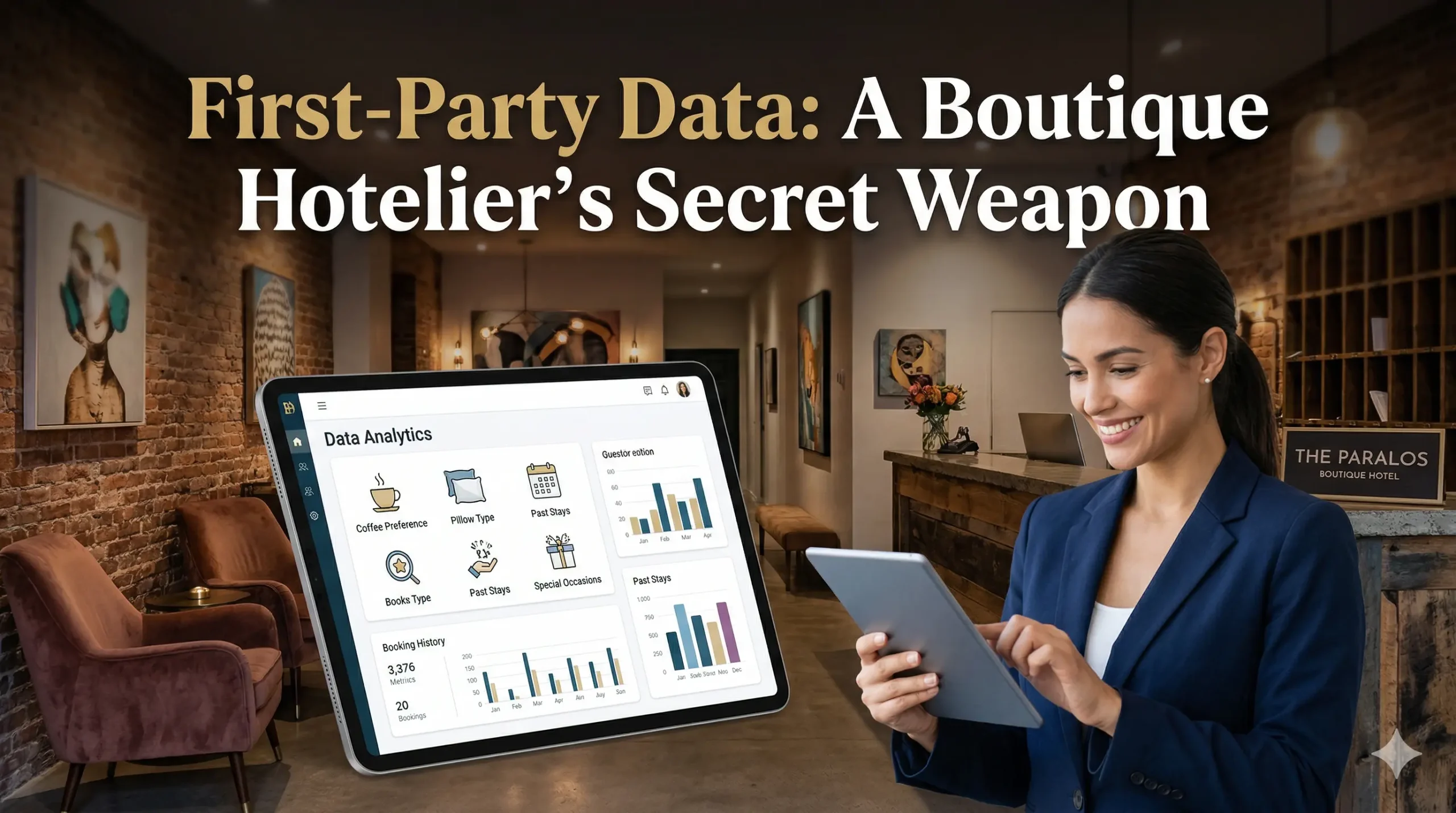
Boutique hoteliers face a clear choice: rely on online travel agents and accept high commission fees, or build direct relationships with guests. First-party data gives you that direct line. This article explains what first-party data is, how to collect it, and how to use it to win more direct bookings and create repeat guests.
Why first-party data matters
First-party data is information you collect directly from guests. It includes emails, contact details, booking preferences, stay history, and on-property requests. This data is owned by you. That ownership lets you act faster and keep more profit from each booking.
For a boutique hotel, the guest relationship is part of the brand. First-party data helps you know guests by name, remember their room choices, and offer the extras that make a stay special. Small hotels can use personal touches to compete with big chains and OTAs.
With this data, you can speak directly to guests with offers that fit their needs. That leads to higher conversion on your website and more repeat stays. Direct bookings save you money on commissions and give you more control over pricing and guest experience.
Finally, first-party data builds long-term value. When you collect and manage clean data, you can measure guest lifetime value, reduce acquisition costs, and create loyalty programs that work. This turns one-time guests into regulars.
How to collect first-party data effectively
Collecting quality data begins with simple, friendly interactions. Ask for what you need, explain the benefit, and make it easy to say yes. Guests will share details if they feel they will get better service in return.
Start at booking. Ask for an email and phone number at reservation. Offer clear benefits for sharing more preferences, such as room type, arrival time, or special requests. A small incentive like a welcome amenity or a discount on a future stay can increase opt-ins.
On arrival and during the stay, collect additional data with polite, low-effort touchpoints. A short check-in form, Wi-Fi login that requests an email, or a tablet in the lobby for preferences will add detail. Staff can record preferences in the property management system when guests mention them.
Below is a clear list of practical data collection points to use. Each item is chosen for ease and guest comfort.
- Email address and phone number at booking
- Preference fields during reservation (bed type, quiet room)
- Mobile opt-in for booking confirmations and offers
- Wi-Fi login capture with consent for marketing
- On-property surveys and post-stay feedback forms
- Loyalty program signup for repeat benefits
Turning data into better guest experiences
Collecting data is the first step. The next step is using it to make stays better and more personal. That means matching data to actions that guests notice and value.
Use guest profiles to personalize arrival notes, room setup, and amenity choices. If a guest favors a quiet room, note it. If another asks for extra pillows, make that standard on arrival. Small actions like these create big loyalty gains.
Email is a powerful channel when it is relevant and respectful. Send targeted offers based on past stays: a spa discount for someone who booked treatments, or a city guide for leisure travelers. Personalized emails are more likely to convert than generic blasts.
Automation helps scale personalization without adding extra staff. Triggered emails for confirmations, pre-arrival messages, and post-stay thanks keep guests engaged. Use data to ensure messages feel human and helpful, not robotic.
Strategies to convert data into direct bookings
First-party data can be the engine that drives more direct bookings. When you know your guests, you can offer timely incentives and targeted packages that tempt them to book with you next time.
Personalized offers work best when they match the guest’s interests. Send former guests offers for the same season, a room upgrade at a special rate, or a package tied to an event they might enjoy. Make the offer specific, limited, and easy to book.
Remarketing to known guests through email or SMS re-engages people who already trust you. A friendly message with a tailored discount or an exclusive rate for returning guests often outperforms broad, public discounts on OTAs.
Use data to create loyalty perks that reward repeat stays. A simple tiered program can offer free breakfast, late checkout, or room upgrades. Clear benefits and easy sign-up make guests more likely to book direct next time.
Tools and workflows that make it simple
Good tools let you collect, clean, and use data without complex IT projects. Aim to connect the systems you already have: your booking engine, property management system (PMS), and customer records.
A central guest database helps unify information from bookings, front desk notes, and post-stay surveys. This makes it easy to segment guests and send relevant messages. Even small hotels can use lightweight customer relationship tools to get strong results.
Here are practical tools and workflows that many boutique hotels find useful. These focus on simplicity and measurable results.
- Booking engine with integrated email capture
- PMS that supports guest notes and preference fields
- Simple CRM or guest profile system for segmentation
- Automated email platform for triggered messages
- Feedback tools for post-stay surveys and reviews
When choosing tools, prioritize ease of use, data export, and basic automation. A clean workflow lets staff focus on service while systems handle repetitive communications.
Privacy, consent, and guest trust
Trust matters more than ever. Guests will share data when they feel it is used respectfully and securely. Clear consent and easy opt-outs build confidence and keep your brand strong.
State how you will use guest data at the point of collection. Simple language works best. For example: we will use your email to send booking details and offers you choose to receive. Ask for consent where required and keep records of preferences.
Keep data secure and limit access to what staff need. Regularly clean and update your lists to avoid contacting people who no longer want messages. Respecting privacy reduces complaints and increases response rates when you do reach out.
Follow local privacy rules. Many regions require explicit consent for marketing and give guests the right to access or delete their data. Make it easy for guests to manage their preferences and see the benefits of staying connected.
Measuring success with simple KPIs
Track a few clear metrics to know whether your first-party data strategy works. Start small and measure the impact on revenue and guest behavior.
Key measures include direct booking share, email open and conversion rates, repeat booking rate, and revenue per available room from direct channels. These numbers show whether your messages lead to more bookings and higher lifetime value.
Test offers and messages in small groups before rolling them out. A/B tests on subject lines, incentives, or timing will reveal what resonates. Use the results to refine your approach and scale the wins.
Keep reporting simple and regular. A monthly dashboard with the core KPIs is often enough for a small hotel team. Review trends, celebrate successes, and adjust tactics where performance drops.
Practical tips for busy hoteliers
Start with small, high-impact steps. You do not need a large budget or big team to get value from first-party data. Focus on consistent habits and simple systems.
Train front desk and reservations staff to capture preferences and update guest profiles. A short checklist for every check-in will build a richer database quickly. Reward staff for entries that lead to measurable repeat business.
Use templates for common messages, but make small personal touches. Mentioning a guest’s previous stay or a known preference makes automated messages feel personal and warms up the path to a repeat booking.
Finally, keep a list of what works. Note which offers convert and which channels drive the most direct bookings. Over time these notes become your playbook and help you improve results without starting from scratch.
Key Takeaways
First-party data is a practical, cost-effective way for boutique hotels to build direct relationships with guests and reduce reliance on OTAs. It gives you the power to personalize stays, reward loyalty, and increase profit margins.
Collect data in friendly, clear ways at booking and during the stay. Use simple tools to unify guest profiles and automate timely messages. Focus on relevant offers that match guest history and preferences.
Respect privacy and keep processes simple. Measure a few key metrics and iterate based on what works. Small hotels can win with personal service backed by smart use of first-party data.
If you run a boutique property, start today by capturing one extra preference for each new booking and using that detail to delight the guest. Over time those small actions turn into loyal guests and more direct revenue for your hotel.