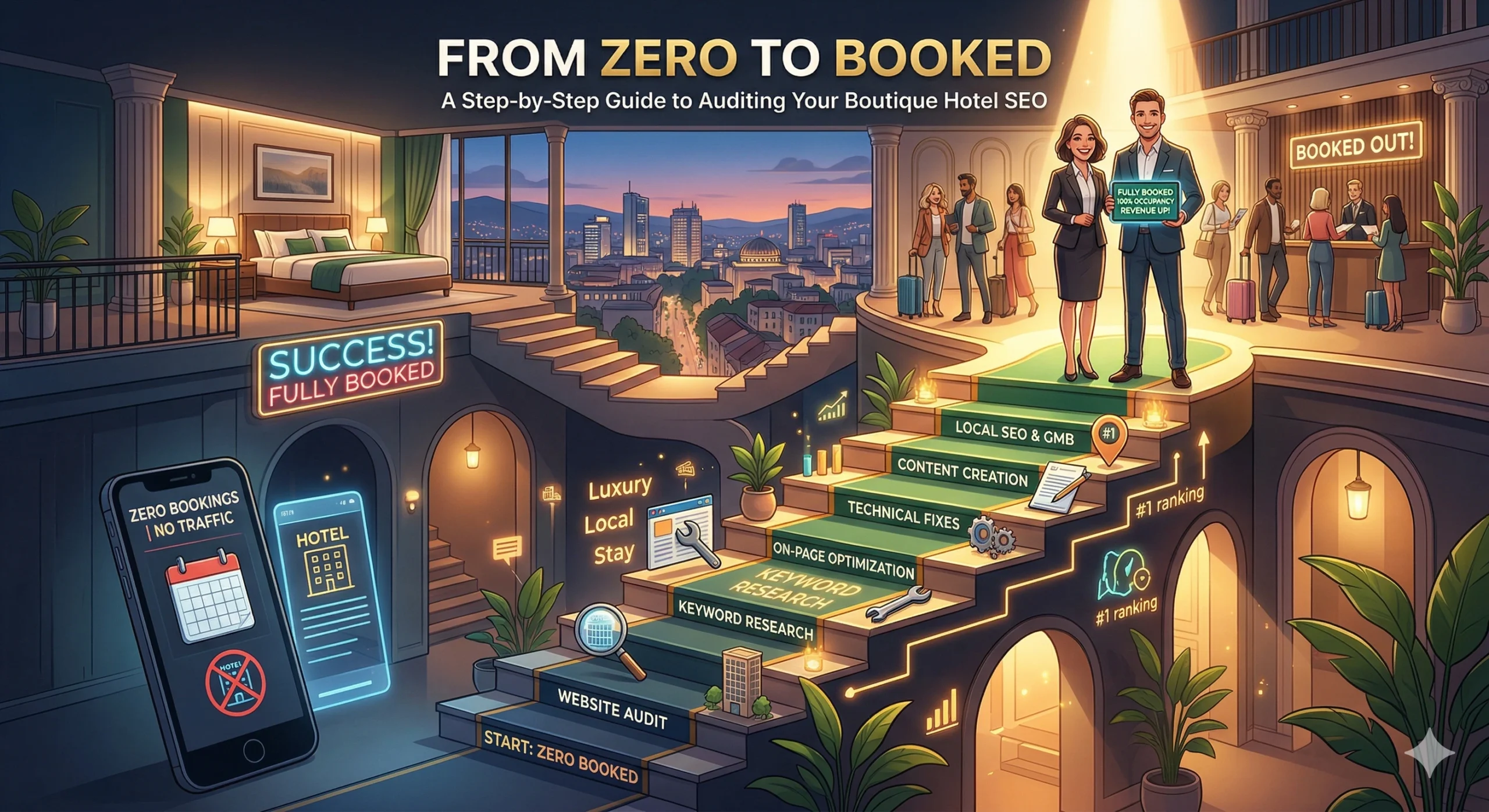

Small hotels can win big with local search. This article shows clear steps to compete in “near me” queries. You will get practical, easy actions to raise visibility and attract guests.
Why Local SEO
Local SEO makes your hotel show up when guests search nearby. Many travelers use short searches like “hotel near me” on phones. If your hotel ranks high you get more calls and booking visits.
Local search is different from broad SEO. It focuses on maps, reviews, and nearby signals. A good local presence makes your hotel look trusted and easy to find.
Competition is strong in travel. But boutique hotels have an edge. You can highlight charm, location, and service to stand out from big chains.
Small wins add up. Improving a few local signals can move you up in results. This article breaks those tasks into steps you can do this month.
Google Business Profile
Claiming and optimizing your Google Business Profile is the first step. This profile powers the map results and the local panel. It is how many guests find your hotel fast.
Fill every field with clear, accurate information. Use your exact business name, address, and phone number. Add opening hours, photos, and booking options if available.
Below are the key items to set up and keep updated on your profile. These items help Google and guests trust your listing.
- Business name: Use your real hotel name, avoid keyword stuffing.
- Address and phone: Ensure they match your website and directories.
- Categories: Pick primary category like “Boutique hotel” and related ones.
- Photos: Add high-quality exterior and interior images that match reality.
- Attributes: Mark amenities such as free wifi, parking, or pet friendly.
Update the profile often. Post offers and new photos monthly. Fresh info keeps your profile active and useful for guests.
On-Page SEO for Hotels
Your website must match the claims on your profile. Google checks the site when it ranks local results. Consistency matters across pages and listings.
Focus on simple tags and clear copy. Use the hotel name, neighborhood, and local points of interest on key pages. Make sure meta tags and headings match those phrases.
Below is a short checklist to apply on each important page, including your homepage and location pages.
- Title tags: Include hotel name and city or neighborhood.
- Headings: Use clear H2s for rooms, amenities, and location details.
- NAP on site: Display name, address, and phone on every page footer.
- Schema: Add LocalBusiness schema for accurate map data.
- Fast pages: Optimize images and hosting to reduce load time.
Local pages work well for boutique hotels. Add a short page for each neighborhood or nearby landmark. These pages attract specific searches and guide guests.
Citations and Local Directories
Citations are listings of your hotel on other sites. They help search engines trust your location and contact details. Consistent citations raise your local authority.
Start with key travel sites and local business directories. Make sure your name, address, and phone match exactly. Small differences can confuse systems that match listings.
Here is how to build and manage citations effectively for a boutique hotel.
- Claim listings on major directories and correct any errors.
- Use the same NAP format everywhere, including abbreviation choices.
- List on local chambers, tourism sites, and neighborhood guides.
- Remove or fix duplicate listings to avoid split signals.
- Track listings with a simple spreadsheet to monitor changes.
Quality matters more than quantity. A few accurate and well-maintained listings beat many sloppy ones. Keep an eye on updates and seasonal changes.
Reviews and Reputation
Reviews are a big local ranking factor and they influence booking decisions. Good reviews signal quality, while recent reviews show active service. Aim for steady, honest feedback from guests.
Respond to every review politely and quickly. Thank guests for praise and address issues with a helpful tone. This shows you care and helps future guests trust your property.
Below are practical steps to manage reviews for your boutique hotel.
- Ask guests to leave reviews after checkout with a simple, friendly request.
- Use on-site signage or email follow-ups to make it easy to review.
- Respond to positive reviews with thanks and to negative ones with solutions.
- Track review trends and common complaints to fix repeat issues.
- Highlight great reviews on your site, keeping quotes short and real.
Never offer fake reviews or incentives that break policies. Authentic feedback lasts longer and builds trust with guests and search engines.
Mobile and Voice Search
Most “near me” searches come from phones. Mobile experience is key to convert searchers into guests. A slow or clumsy site loses people quickly on mobile devices.
Keep content short and scannable for mobile readers. Use clear buttons for call, directions, and booking. Make sure booking forms are simple and fast to complete.
Voice search is growing. People ask short, natural questions like “boutique hotel near me with parking.” Make sure your site answers those queries in plain language.
Test your site on many phones and browsers. Fix any layout or button issues. A smooth mobile flow turns local searches into reservations.
Technical Local Signals
There are backend items that affect local ranking. They are technical but easy to fix with basic tools. These signals ensure search engines can read your site well.
Focus on fast hosting, secure site protocol, and proper structured data. These items help both users and search engines. They also support your local listings in maps and snippets.
Here are key technical checks to run for your hotel site.
- SSL: Use HTTPS to keep guest data secure and boost trust.
- Page speed: Compress images and use caching to load pages fast.
- Structured data: Implement LocalBusiness and Hotel schema.
- Mobile-first: Ensure content and layout work on small screens.
- Clean URLs: Use clear, short URLs with city or neighborhood terms.
Work with your developer or a trusted agency for these fixes. Even small technical improvements can lift your local visibility.
Local Content Strategy
Good local content draws searchers who want specific, nearby information. Content that explains local events, routes, or nearby dining helps people choose your hotel. It also signals location relevance to search engines.
Create short pages or posts about nearby landmarks and seasonal events. Use simple language and real tips. Guests like honest advice and real photos that set expectations.
Below are content ideas to build local relevance for your boutique hotel.
- Neighborhood guides: Short walks, cafes, and must-see spots within 10 minutes.
- Seasonal pages: Local festivals, holiday markets, and event calendars.
- Guest itineraries: One-day and weekend plans that start at your hotel.
- Accessibility info: Clear notes on transport, parking, and entryways.
- Staff picks: Short features on favorite local places from your team.
Update content regularly. A new event or photo keeps pages fresh and useful. This steady activity helps search engines notice your site more often.
Track Results
Measure what matters to see if your work pays off. Track calls, clicks to booking, map views, and form submissions. These tell you which steps bring guests.
Use simple tools to collect data and make small tests. Try a new photo, change a call to action, or tweak the headline. Then watch how metrics change over a few weeks.
Here are the core metrics to track for local SEO success.
- Search impressions and clicks on your Google Business Profile.
- Booking clicks and form submissions on your website.
- Call volume and direction requests from the profile.
- Review counts and average ratings across platforms.
- Local page traffic and conversion rates from those pages.
Artofthecode recommends keeping a short monthly report. It helps you focus on the actions that move bookings and revenue.
Key Takeaways
Local SEO is a strong tool for boutique hotels. Focus on Google Business Profile, clear site info, and real guest reviews. These core items bring quick wins.
Work in small steps. Claim listings, fix on-site details, and ask for reviews. Keep content local and mobile-friendly. Regular updates keep your hotel competitive.
Track simple metrics and test changes. Small, steady improvements often beat rare big moves. With care and focus you can own more “near me” searches and welcome more guests.
Start today with one task. Update your Google Business Profile or fix a key on-page element. Each small action builds a stronger local presence over time.