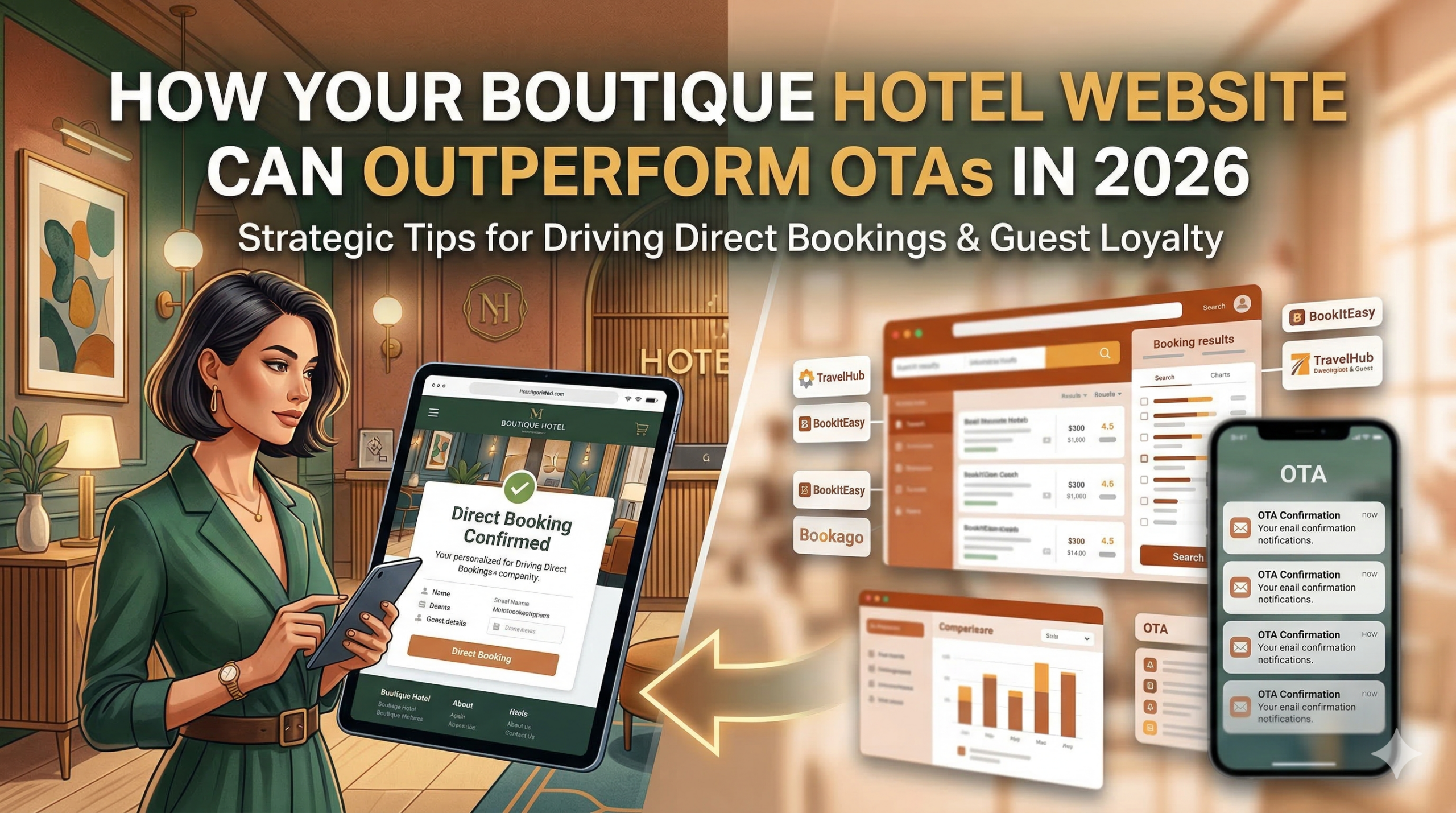
Your boutique hotel can win more direct bookings with the right website. This short guide shows clear steps to make that happen. It is written for hoteliers and readers of Artofthecode who want practical tips and easy changes that work.
We will explain why direct bookings matter and what to change on your site. The tone is friendly and direct. You will get concrete examples and a plan you can use right away.
Read on to find methods for design, pricing, trust signals, and marketing. These ideas are simple to follow and aimed at real results. Expect clear language and enthusiasm for hands-on improvements.
Why direct bookings matter
Direct bookings keep more revenue in your hands. When a guest books on your site you save on commission fees. Those saved fees can be invested in better guest experiences. That leads to repeat stays and better reviews.
Direct guests give you full control of the guest journey. You decide the messaging and the upsells. You can collect preferences and offer room upgrades or local experiences before the guest arrives. This control helps you turn a single stay into a long-term relationship.
Direct bookings let you build a loyal audience. When a guest signs up for email or returns to your website, you can offer tailored deals. A steady stream of repeat guests lowers your cost of acquisition. You stop depending on OTAs for every booking.
Direct sales are also better for brand building. Your website is where your story and style live. Use it to show personality, values, and local flavor. That is something OTAs rarely convey in a strong way.
Design and user experience
A clear and fast website helps convert visitors to guests. Visitors expect pages to load quickly and booking steps to be simple. If your site is slow or confusing, guests will leave and might book on an OTA instead. Simple navigation and strong calls to action make a big difference.
Good images and real descriptions matter. Use honest photos and clear room details. Write short, friendly copy that highlights what makes your hotel unique. Short sentences with a warm tone help readers imagine the stay. Avoid long blocks of text that tire the eye.
To improve conversion, test your booking funnel. Small changes can have big impact. Try shorter forms, fewer required fields, and clearer room names. Use one prominent booking button and place it in the header and on room pages. Make it easy to return to the booking process.
Below are practical design elements that help guests book on your site. Each item is explained so you can prioritize changes easily.
Use these design elements to guide updates:
- Fast loading: Optimize images and code to reduce load time. Faster pages keep visitors engaged.
- Mobile-first layout: Most guests book on phones. Make buttons large and forms simple for touch screens.
- Clear booking CTA: A single, high-contrast button labeled with the offer works best.
- Real photos: Show true room shots and local scenes. Guests trust authenticity.
- Short copy: One or two lines per feature. Use bullets for amenities.
Pricing and offers that convert
Competitive pricing is important, but price alone does not win bookings. Guests want value and confidence that they are getting the best deal. Use clear policies and simple rate structures to build trust. Avoid long lists of hidden fees that create friction.
Make your best rate obvious on your website. Show a price match or exclusive perk for booking direct. Perks can be small but meaningful. A free breakfast or flexible cancellation often tips a booking to your site instead of an OTA.
Test package ideas and limited time offers to create urgency. Limited availability messages work well when they are truthful. Use genuine scarcity and avoid false claims. Guests will notice if offers are misleading and trust will drop.
Below is a short list of direct booking offers that work. Read the short intro first, then consider which you can implement quickly.
- Flexible cancellation: Allow easy changes to reduce booking hesitation.
- Exclusive perks: Offer welcome drinks, late checkout, or breakfast for direct bookings.
- Member prices: Create a simple members list for returning guests with a small discount.
- Package deals: Combine rooms with local experiences to add value.
- Price honesty: Show total cost up front including taxes and fees.
Trust, reviews, and personalization
Trust is a major reason guests choose an OTA. OTAs show many reviews and a familiar process. Your site must offer the same feeling of reliability. Show recent guest reviews and staff photos to build confidence. Include short quotes and ratings in visible spots.
Personalization helps guests feel seen. Use simple ways to tailor messages. If a visitor looks at a certain room, show related offers or add-ons for that room. If a guest returns to your site, greet them with a special offer or a saved preference. Small touches increase the chance of booking.
Collect and use guest feedback to improve the stay. After a stay, ask for a review and permission to send offers. Display selected reviews on room pages. Use review highlights to answer common concerns and to show what guests love most.
Here is a short list of trust-building actions you can add to your site. Each item is easy to implement and explains the benefit.
- Display reviews: Highlight short, authentic guest quotes and ratings.
- Staff page: Add faces and short bios to make your hotel feel human.
- Clear policies: Show cancellation and payment terms in plain language.
- Secure booking widget: Use HTTPS and display trust icons to show safety.
- Personalization: Save preferences and show tailored offers on return visits.
Booking technology and SEO
Your booking engine must be fast and reliable. Choose a system that integrates with your website without interrupting the guest flow. A clunky pop-up or redirect can cost you bookings. Embed the booking widget or use a native checkout to reduce friction.
Search engine traffic is a major source of guests. Optimize your site for local search terms and intent. Use clear meta titles and meta descriptions that match what guests search for. Keep URLs short and descriptive and include your hotel name and location where it makes sense.
Structured data helps search engines show useful results. Use schema for hotels, reviews, and rates so search engines can display your availability and pricing. This makes your listings more visible and trustworthy in search results.
Below is a list of technical steps to improve booking performance and SEO. Read the lead-in sentence then pick the most urgent items to fix first.
- Fast hosting: Use reliable hosting and a content delivery network to speed up pages.
- Mobile speed: Measure mobile performance and fix issues that slow it down.
- Schema markup: Add hotel and review schema to improve search result appearance.
- Clear metadata: Use short meta titles and descriptions with location and hotel name.
- Booking integration: Embed the booking flow so users never leave your site during checkout.
Marketing and distribution mix
A balanced marketing plan will reduce dependency on OTAs. Use email, organic search, and social media to reach past guests and new ones. Email is especially powerful for repeat bookings. Send simple, personal messages with clear offers.
Social channels help tell your hotel’s story. Share guest moments, local tips, and short videos. Use the same voice as your website so guests get a consistent experience. Small budgets can still reach local audiences with smart targeting.
Partnerships with local businesses create unique packages and extend your reach. Work with a café, tour guide, or spa to build combined offers. These partnerships add value and help you stand out from standard OTA listings.
Use the short list below to shape a practical marketing plan. Read the sentence before the list and then prioritize two or three tactics you can start this month.
- Email campaigns: Send welcome notes, seasonal offers, and local guides to past guests.
- Local SEO: Claim and optimize local listings, and add local keywords to content.
- Social stories: Post short local tips and guest moments with consistent branding.
- Partnership packages: Bundle rooms with local experiences to stand apart.
- Retargeting ads: Use small ad budgets to remind recent visitors to complete a booking.
Key Takeaways
Your boutique hotel website can compete with OTAs if it focuses on clarity and trust. Fast pages, simple booking steps, and honest pricing build confidence. A clear message and good photos help guests imagine their stay.
Offer meaningful perks and show real reviews. Use personalization and follow-up emails to turn one stay into many. Keep your booking engine smooth and your site optimized for search engines. Small technical fixes can drive big gains.
Balance your marketing so you do not rely only on OTAs. Use email, social, and local partners to build direct demand. Prioritize a few high-impact changes and measure results. Over time, more direct bookings will grow your revenue and your brand value.
Start by auditing your site for speed, clarity, and trust signals. Make two simple updates this week. Then test one offer and measure the result. With steady work and clear priorities you will grow direct bookings and strengthen your hotel’s independence from OTAs.