Gen Z wants more than products. They want moments, meaning, and real interaction. This article explains who Gen Z is, what they care about, and how to build marketing that feels like an experience. Read concise, practical steps you can use now to reach this audience.
Who is Gen Z?
Gen Z includes people born roughly from the mid 1990s to the early 2010s. They grew up with the internet, fast phones, and social platforms. That tech-native life shapes how they shop, work, and connect.
They expect speed and honesty. Slow brands or vague messages struggle to hold their attention. Gen Z judges brands by action, not promises.
They value social proof and peer voices. Reviews, creator content, and authentic posts matter more than polished ads. A product with real user stories will often out-perform a glossy campaign.
Generational traits vary, but a clear pattern is that this group treats experiences as currency. Marketers must match that mindset to win attention and loyalty.
What Gen Z values
Gen Z values authenticity and purpose. They want brands that are honest and visible about what they stand for. Vague statements will not satisfy them; specifics and action do.
They also care about creativity and self-expression. This generation uses social platforms to show who they are. Brands that enable that expression fit more naturally into their routines.
Convenience and relevance are essential. Gen Z expects smooth shopping flows, fast responses, and content that feels personal. They will move on quickly if your experience is clunky.
Finally, community matters. Gen Z often makes choices based on group identity and peer recommendation. Building a sense of belonging around your product or service creates repeat engagement.
Experience-first strategies
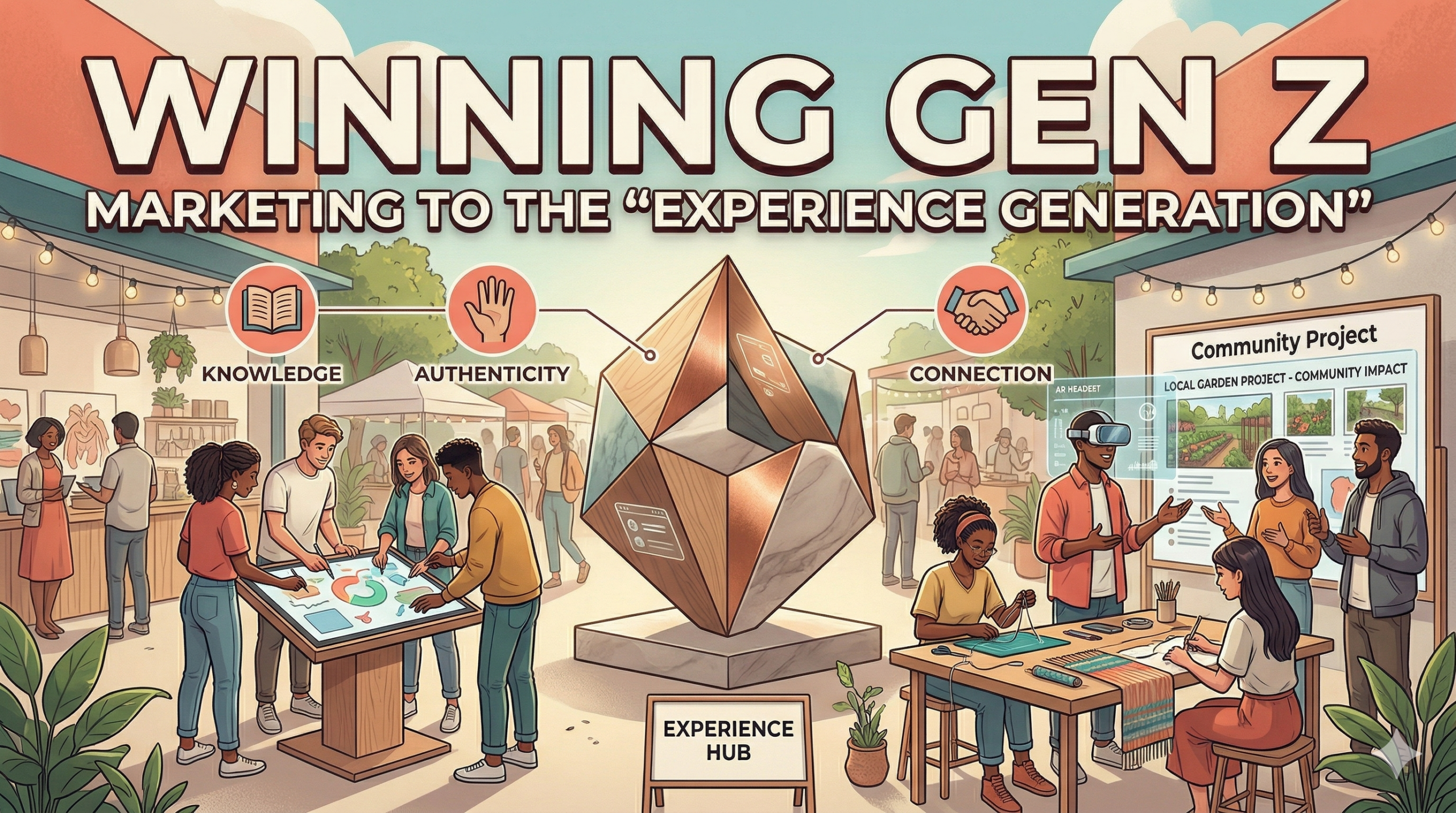
To reach Gen Z you must build campaigns that feel like experiences, not interruptions. Experiences can be digital, physical, or a mix. The goal is to create moments they remember and share.
Start with product storytelling. Show how your product fits into a real life moment. Use short, visual stories that highlight lifestyle, emotions, and utility. Keep language simple and honest.
Next, create opportunities for participation. Let users co-create content, customize products, or vote on new ideas. Participation builds ownership and turns buyers into advocates.
Here are practical formats that work well for experience-focused campaigns. Each one encourages interaction or personal connection, which helps your brand feel alive to Gen Z.
- Short-form videos that show a moment or hack in 15 to 60 seconds.
- User-generated campaigns where customers share real results or styles.
- Live events and activations that blend in-person energy with online sharing.
- Interactive tools like quizzes, AR filters, or customizable product options.
- Collaborations with creators who match your brand tone and audience.
Channels that work
Choosing channels is about where Gen Z spends time and what they expect there. Each platform has a language and pace. Match your message to the place and the format.
Visual platforms like TikTok, Instagram, and similar short video venues are top choices. These places favor fast, creative visuals and trends. Move quickly and stay flexible with creative formats.
Messaging apps and community spaces also matter. Gen Z uses group chats and niche forums to share recommendations. Brands that create small group experiences can tap into trusted networks.
Below is a focused list of channel tactics. Use the right mix based on your product and audience, and test to learn what sticks.
- Short video sequences for discovery and entertainment.
- Creator partnerships to build credibility and reach.
- Micro-influencer programs to reach niche communities.
- Owned social groups or channels to foster repeat interaction.
- Experiential pop-ups or hybrid events that create shareable moments.
Measuring success
Traditional metrics like reach still matter, but they do not tell the full story. Gen Z responds to metrics that track engagement, retention, and real world action. Tie your goals to simple outcomes.
Focus on engagement signals first. Watch watch time, comments, saves, and shares. These show whether your content holds attention. A high share rate means people want others to see it.
Next, track conversion behaviors that match the experience. Clicks are fine, but also track trial signups, event RSVPs, and user-generated submissions. These show real interest.
Finally, measure long term loyalty. Repeat purchases, community activity, and referral rates tell you if the experience turned a user into a fan. These metrics matter for sustained growth.
Implementing for your brand
Start small and learn fast. Run short tests that try different creative hooks and formats. Use the data to refine ideas before you scale. This reduces risk and finds what truly resonates.
Empower creators and internal teams to move quickly. Create a simple approval flow so ideas can be produced and launched in days. Speed matters for staying on trend and in the conversation.
Invest in tooling that supports interaction. That can be a simple content calendar, a creative template library, or a basic analytics dashboard. The right tools keep your team efficient and aligned.
Remember brand consistency. Even as you test fresh formats, keep your core message and values clear. That steady base helps Gen Z recognize and trust your brand over time.
Key Takeaways
Gen Z seeks experiences, not ads. Marketing that wins is fast, honest, and interactive. Focus on moments that feel personal and shareable.
Use short video, creator partners, and community touchpoints. Measure what matters: engagement, action, and loyalty. Keep tests small and iterate quickly based on real results.
Build campaigns that invite participation and let users express themselves. When your brand helps Gen Z tell a story about who they are, you create lasting value.
For teams at Artofthecode or any brand, the path is clear: design for experience, move with speed, and measure the moments that matter. These steps will help your brand connect with the Experience Generation in a meaningful way.