Your brand appears in search every time someone looks for your name, product, or service. That moment can shape trust and sales. This article explains why owning your search results matters and how to take control with clear steps that work.
We cover risks of unmanaged search listings, key tactics to own the top results, simple ways to monitor performance, and common mistakes to avoid. Read on to get practical ideas you can use right away to protect your brand and reputation.
Why search matters
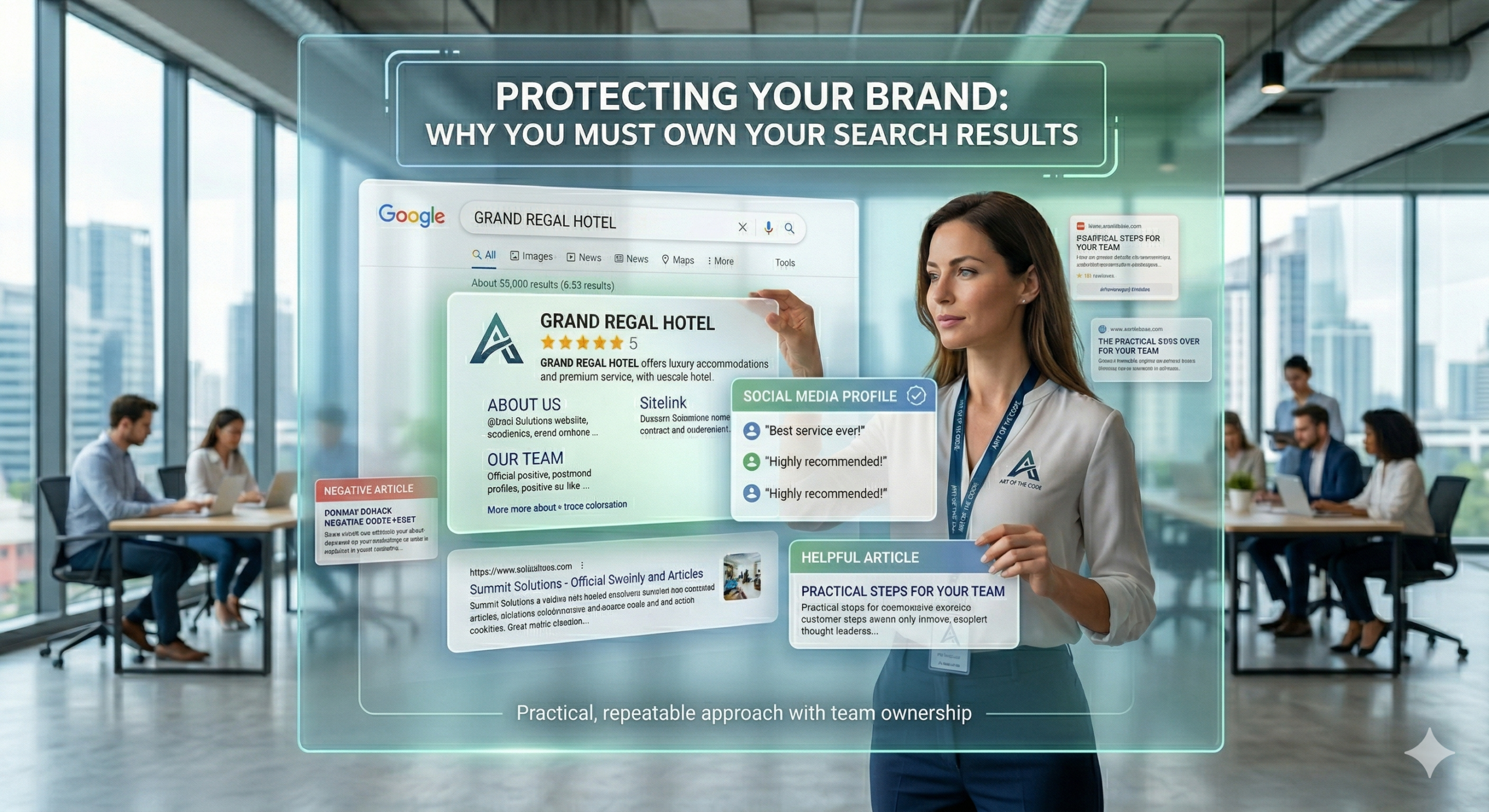
Search engines are often the first place people meet your brand. A good search presence builds trust before a person clicks to your site. If your top results show helpful pages, people feel confident. If they show complaints or wrong information, those people will form a bad opinion fast.
Search results shape first impressions for prospects, partners, and job candidates. A clear set of branded content helps control that first impression. That control matters for sales, hiring, and partnerships because decisions often begin with what people find online.
Search also affects advertising and marketing efficiency. When your owned content appears in searches, paid ads can work better. People are more likely to click your ad or your page when they see matching, trusted results. This reduces cost and raises return on investment for campaigns.
Risks of not owning search results
If you ignore search results, other people will fill the space. That can lead to outdated contact details, negative posts, or incorrect business listings. These items can confuse customers and cost sales. You must be aware of what shows up for your brand name.
Third parties like review sites, news outlets, or social pages can push your official pages down. That makes it hard for customers to find accurate information quickly. When official pages do not rank, your message is weaker and errors spread more easily.
Below is a short list of the most common risks you face when you do not own search results. Read each item carefully to see how it could affect your operations and reputation.
- Wrong information: Old addresses, bad phone numbers, or incorrect product details can mislead customers and create friction.
- Negative reviews and posts: A few bad posts can dominate search results and scare off potential buyers if you do not counter them with positive content.
- Impersonation and fraud: Fake profiles or copycat businesses can appear and harm your brand or take your customers.
- Lost traffic and leads: If your official pages do not rank, traffic goes to other sites and leads are harder to capture.
- Damaged trust: Confusing search results lower confidence for partners and investors as well as customers.
How to own your search results
Owning search results means creating and promoting content that you control. That content should appear at the top of search pages for your brand terms. Start with a plan that covers website content, profiles, and public pages.
Use a few reliable tactics to build a strong set of pages. Focus on pages that match searches people actually make. Keep those pages accurate and easy to find. Make sure each page answers common questions and provides clear next steps for visitors.
Here is a practical list of steps to take. Use these actions together. Each step strengthens the others and raises your chance to control the top results.
- Claim core profiles: Set up and verify your main business listings and social profiles on major platforms that show up in searches.
- Optimize your site: Use clear titles, meta descriptions, and brand-focused pages that match what people search for about your company.
- Create helpful content: Write FAQs, team pages, product pages, and press pages that answer common queries and show official information.
- Use structured data: Add schema markup to your site so search engines can show richer results for your brand pages.
- Build authority: Earn links from trusted sites and get mentions in reputable outlets to raise the visibility of your official pages.
Monitoring and measurement
Once you publish and optimize content, you need to watch how it performs. Regular monitoring shows if your pages appear where you expect them. It also flags new problems early, so you can act before they spread.
Set up simple checks to track brand search visibility. Check the top results for your brand name and common product searches. Do this weekly at first, then adjust frequency based on how stable your results are.
Below are key metrics and habits to use in your checks. These items help you measure progress and show where to focus your next actions.
- Rank of official pages: Note where your homepage, key landing pages, and profiles appear in search results for brand terms.
- Search snippets and cards: Verify that snippets show accurate info and that any knowledge panels or business cards contain the right details.
- Traffic and clicks: Track organic traffic to your branded pages and the click-through rate from search results.
- Mentions and reviews: Monitor mentions and reviews on third party sites. Look for new negative posts and respond quickly when needed.
- Alerts: Use simple alerts to notify your team if a new top result appears that you did not expect.
Common mistakes to avoid
Many teams try one tactic and stop. For example, they create a profile and never update it. That leaves old data visible in search. Consistent care is essential. Short bursts of work will not keep your brand safe in search results over time.
Another common error is ignoring the user experience on your branded pages. If your official page loads slowly or is hard to read on phones, search engines may favor other pages. A slow or confusing page reduces trust and lowers clicks even if it ranks well.
Here is a compact list of mistakes to watch for. Check each and set a plan to avoid or correct them. Taking steady, small steps will prevent bigger problems later.
- Neglecting updates: Profiles and pages with old hours, addresses, or product info cause confusion and lost sales.
- Relying on one page: If only one official page ranks, a single error can remove your main presence. Build several owned pages.
- Ignoring reviews: Not responding to feedback lets negative posts stick in top results without context.
- Poor mobile experience: Many searches happen on phones. A poor mobile page hurts both ranking and conversions.
- No monitoring routine: Without regular checks, new threats and changes can go unnoticed for too long.
Key Takeaways
Owning your search results is about control and trust. When your official pages appear at the top, you shape the story people see. This leads to better conversions, stronger reputation, and clearer communication with customers.
Start by claiming profiles, optimizing key pages, and publishing helpful content. Monitor results, measure progress, and fix problems quickly. Small, steady work keeps search results aligned with your brand goals.
At Artofthecode we encourage a practical, repeatable approach. Build a baseline, set a monitoring routine, and assign clear ownership inside your team. That keeps your brand safe and makes search a reliable channel for growth.
Protecting your brand online is not optional. It is a core part of how people find and trust your business. Take these steps now and make search a place where your brand looks its best.