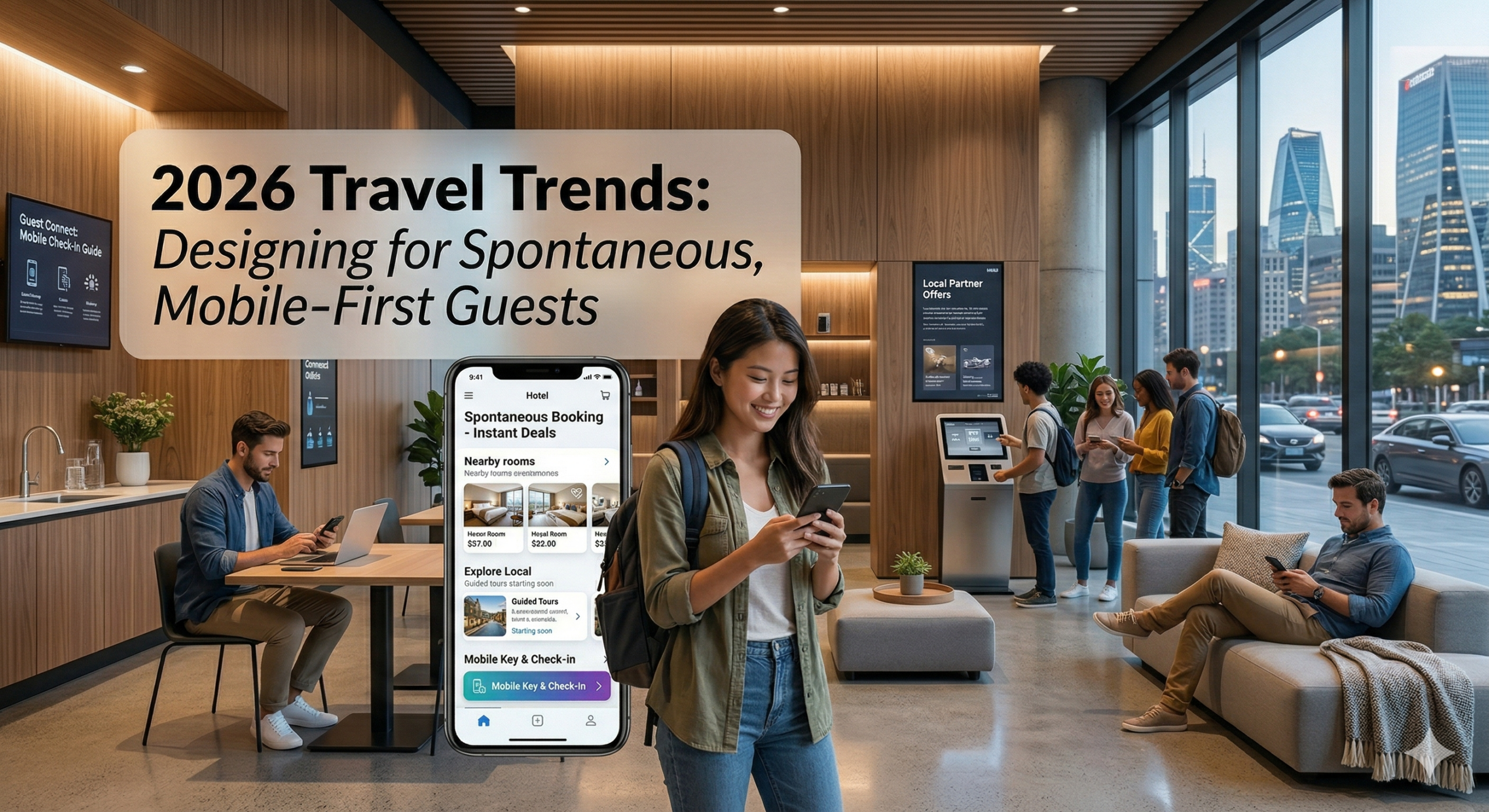
Travelers in 2026 expect speed, clarity, and the freedom to decide on the go. This article explains practical design and operational steps you can take to serve guests who book last minute and use mobile as their main channel. Read on for clear, actionable guidance that teams can use right away.
Why spontaneity matters in travel
Travel habits have shifted. Many guests now plan less and choose more in the moment. They scroll reviews, check availability, and make a decision within minutes. This means design and operations must match that rhythm or risk losing bookings.
Spontaneous travel brings higher conversion potential when you meet the guest at the right time. A quick, clear mobile experience turns intent into action. When the interface is slow or confusing, users leave and may not return.
Businesses that serve spontaneous guests well can increase occupancy and capture premium rates for instant bookings. Operators can clear last-minute inventory and improve overall revenue without costly promotions.
Meeting spontaneous demand requires products that are fast, readable, and forgiving. This is both a UX challenge and an operational one. The sections below break down the design patterns and the team changes needed to win more mobile-first guests.
Mobile-first design principles for on-the-go users
Design for small screens and short attention spans. Mobile-first means prioritizing the most urgent tasks and making them effortless. Think about the single goal a spontaneous traveler has, and make that goal very easy to reach.
Below are core design principles to guide your mobile experience. Use them as a checklist during design reviews and product planning.
- Single-task flows: Let users complete one action at a time. For example, let a guest search and book in a few screens without detours.
- Large, clear CTAs: Use bold, readable buttons that are easy to tap. Buttons should name the action, such as “Book Now” or “Reserve Room.”
- Progressive disclosure: Show only the most important info first. Reveal secondary details only when the guest asks for them.
- Fast feedback: Give immediate visual or haptic feedback for taps and selections. Let users know their request is processing.
Keep interactions minimal and predictable. Avoid long forms and complex dropdowns that block action. Fewer fields lead to higher completion rates on mobile.
Design with readability in mind. Use clear headings, short paragraphs, and enough contrast for outdoor use. Many guests access apps in bright sunlight, so legibility is essential.
Booking flows that favor instant decisions
Booking flows must reduce friction. That means fewer screens, fewer fields, and clear pricing up front. Prioritize speed over optional personalization during the first booking steps.
Before a list, here is a short explanation of what to include. These flow elements make it much easier for a guest to decide quickly and complete a reservation from their phone.
- Quick search and filter: Let users find options with a single search box and a few high-value filters such as price, distance, and availability.
- Instant availability badge: Highlight rooms or offers that are immediately bookable. Use clear labels like “Instant” or “Book now” to reduce uncertainty.
- Summary-first booking: Show a compact summary card with price, rate rules, and cancellation policy. Allow the guest to confirm without scrolling through long terms.
- One-screen payment: Offer simplified payments that keep the user in the flow, such as saved cards, mobile wallet, or a minimal checkout form.
Be transparent about taxes and fees before the final confirmation. Hidden costs cause refunds and chargebacks, and they reduce trust during spontaneous purchases.
Support quick modifications and cancellations. Guests who book on short notice are more likely to adjust plans. A clear policy and a simple change flow improve satisfaction and reduce support calls.
UX patterns and micro-interactions for quick converts
Micro-interactions make the experience feel alive and reliable. Small animations, clear states, and instant confirmation messages reduce anxiety and help users move forward quickly.
Here are practical UX patterns that boost confidence and speed for mobile-first guests. Each pattern supports a single task and keeps the user informed.
- Skeleton screens: Show placeholders while content loads so users see structure immediately rather than a blank page.
- Sticky summary bars: Keep the booking summary visible as users scroll. This prevents them from losing context and encourages conversion.
- Inline validation: Validate fields as the user types so errors are fixed early. Avoid sending users back after they submit the form.
- Confirmations and receipts: Deliver instant, readable confirmations with next steps. Make them scannable and easy to reference on mobile.
Design microcopy that guides without overwhelming. Short, friendly labels and help text reduce hesitation and make choices clearer for users on the move.
Test interactions in real conditions. Run usability tests outdoors, on different phones, and with varying network speeds. This reveals problems that lab tests miss.
Operational changes for hotels and operators
Design alone is not enough. Operations must adapt to support spontaneous guests. This includes staff readiness, flexible inventory rules, and pricing models that react in real time.
Below is a focused list of operational moves that help teams capture last-minute bookings without increasing workload or errors. Each item aims to align front-line staff and systems with the mobile experience.
- Flexible inventory blocks: Allow short windows where rooms can be reserved at short notice without manual approval.
- Clear staff workflows: Give front desk and housekeeping clear triggers for last-minute check-ins to avoid confusion during arrival.
- Dynamic pricing rules: Use rules that increase visibility and match demand for near-term availability while keeping margins healthy.
- Automated confirmations: Reduce manual steps by automating messages and access codes for immediate arrivals.
Train staff to handle rapid arrivals and to use mobile tools for quick check-in. A smooth arrival is part of the booking promise and drives repeat bookings from spontaneous guests.
Monitor operational KPIs in short windows. Track same-day bookings, average lead time, and check-in completion rates to see how your systems handle last-minute demand.
Performance, accessibility, and offline resilience
Speed and reliability matter more than ever for mobile-first travelers. A fast app that works offline or on weak networks wins more bookings. Focus on measurable performance improvements.
Before the list below, here is why these technical areas matter. They reduce friction and keep the interface usable when conditions are not ideal, which is when many spontaneous decisions happen.
- Optimized assets: Compress images, use modern formats, and lazy-load nonessential elements to keep pages quick to render.
- Progressive Web App features: Implement caching and service workers so critical flows work offline or with spotty networks.
- Fast server responses: Reduce API latency and prioritize booking endpoints to keep the UI responsive during peak moments.
- Accessibility checks: Ensure buttons and inputs are reachable, labels are clear, and contrast meets standards for outdoor visibility.
Prioritize time-to-first-interactive and time-to-book metrics in performance testing. Improvements here directly affect completion rates for quick-booking guests.
Use monitoring tools to catch real-world failures quickly. When a payment flow or availability check fails, automatic alerts help engineers fix issues before many customers are affected.
Measurement and metrics that matter
Track metrics that show whether your changes help spontaneous guests. Avoid vanity numbers and focus on actions that represent completed intent and satisfaction.
Here is a short list of key performance indicators to measure. These metrics give teams clear signals about the mobile experience and operational alignment.
- Same-day booking rate: The share of bookings made for arrival within 24 hours. This shows how well you capture last-minute demand.
- Mobile conversion rate: The percent of mobile sessions that turn into bookings. Watch this by device and network speed.
- Time-to-book: The median time from first interaction to completed reservation. Shorter times mean less friction.
- Check-in completion rate: The percent of arrivals that use the intended mobile or automated check-in options.
Combine quantitative data with short qualitative feedback loops. Quick surveys after arrival or a simple thumbs-up prompt can reveal pain points that numbers alone miss.
Set benchmarks and iterate. Use A/B tests to validate changes and roll out improvements for the smallest groups first to reduce risk.
Implementation checklist for teams
Turning strategy into results requires a clear plan. Use the checklist below as a starting point for cross-functional work between product, design, engineering, and operations.
Read these steps before you begin. Each item is a practical action that teams can assign, measure, and complete within a sprint or two.
- Map the mobile booking journey: Identify the essential screens and remove unnecessary steps that slow the guest down.
- Prioritize quick wins: Fix slow endpoints, reduce form fields, and improve CTAs before tackling larger architecture changes.
- Align operations: Update staffing and inventory rules to support same-day arrivals and instant confirmations.
- Run real-world tests: Test the product outdoors, on different devices, and under weak networks to expose real issues.
- Track impact: Monitor the KPIs listed above and iterate based on measured results.
Make small, measurable releases and communicate changes to frontline teams. When the product changes, staff need to know how to support the new flow and handle exceptions.
Keep a backlog of usability fixes and revisit them regularly. Small improvements compound quickly and can result in significant gains for spontaneous, mobile-first guests.
Key Takeaways
Design for speed, clarity, and trust. A mobile-first approach focuses on the guest’s immediate goal and removes anything that delays a decision. This directly improves conversion for spontaneous travelers.
Combine UX fixes with operational readiness. Workflows, pricing rules, and staff training must match the speed of the product. When teams act together, last-minute bookings become a reliable revenue stream.
Measure real outcomes and iterate. Track same-day bookings, mobile conversion, and time-to-book to see the effect of your changes. Use real-world tests and small releases to reduce risk while improving the experience.
On Artofthecode we encourage teams to build mobile-first paths that feel fast and clear. Make booking simple, test in real conditions, and align your operations with the product to win spontaneous guests and create better travel moments for everyone.